
 EN
EN
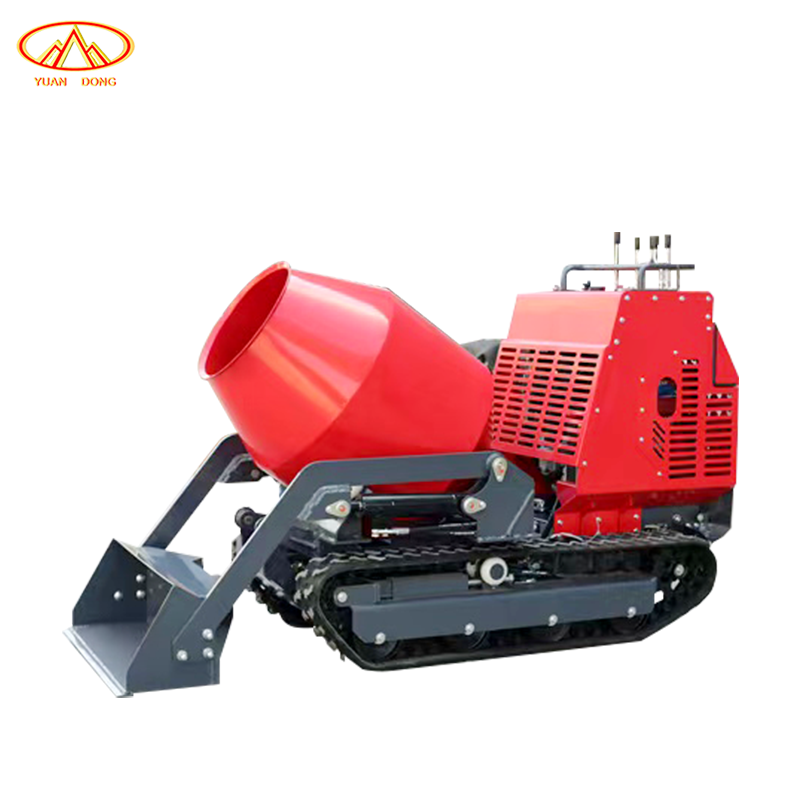
In modern construction projects, equipment mobility and versatility have become crucial factors determining operational efficiency and cost-effectiveness. The crawler concrete mixer represents a significant innovation in concrete handling technology, combining the mixing capabilities of traditional concrete equipment with the mobility of tracked vehicles. This specialized construction machine has transformed how contractors approach concrete placement in challenging terrains and confined spaces, offering solutions that conventional wheeled mixers simply cannot provide. Understanding what defines a crawler concrete mixer and recognizing its distinctive advantages helps construction professionals make informed equipment decisions that directly impact project timelines, labor costs, and overall job site productivity.
The crawler concrete mixer addresses a fundamental challenge in construction logistics: delivering freshly mixed concrete to locations where standard equipment cannot operate effectively. Unlike conventional concrete mixers that rely on wheels and require stable, prepared surfaces, the crawler-based design enables operation across rough, uneven, or soft ground conditions. This capability proves essential in early-stage construction, remote infrastructure projects, landscaping applications, and renovation work where established access routes may not exist. By integrating mixing and transport functions into a single tracked platform, this equipment category eliminates multiple handling steps, reduces labor requirements, and minimizes concrete waste caused by transit delays or transfer operations.
Defining Characteristics of Crawler Concrete Mixers
Core Design and Structural Components
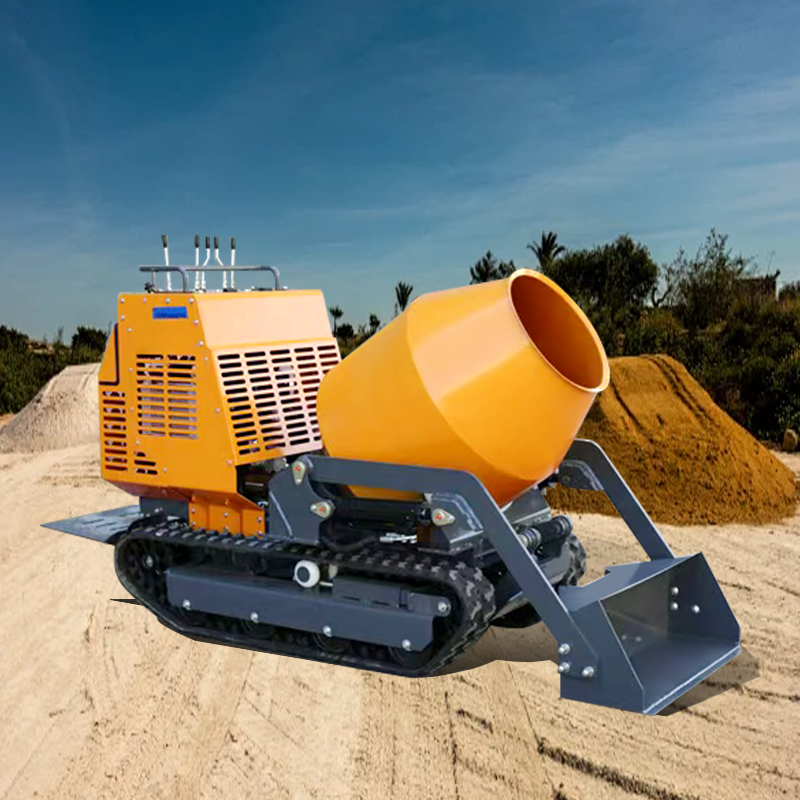
A crawler concrete mixer is fundamentally defined by its tracked undercarriage system combined with an integrated mixing drum. The crawler tracks, similar to those found on excavators and bulldozers, distribute the machine's weight across a larger surface area compared to wheeled vehicles. This weight distribution enables the equipment to traverse soft soil, mud, sand, gravel, and uneven terrain without sinking or losing traction. The mixing drum, typically mounted on a rotating platform or fixed chassis, ranges in capacity from compact models holding 0.5 cubic meters to larger units accommodating 3 cubic meters or more of mixed concrete.
The propulsion system of a crawler concrete mixer typically employs hydraulic motors that drive each track independently, providing exceptional maneuverability including zero-radius turning capabilities. This hydraulic drive system offers precise speed control and maintains consistent power delivery regardless of load conditions or terrain gradients. The mixing drum rotation is powered either by the same hydraulic system or through mechanical linkages connected to the main engine, ensuring continuous mixing action during both stationary operation and transit. Advanced models incorporate variable-speed drum rotation, allowing operators to adjust mixing intensity based on concrete specifications and aggregate characteristics.
Operational Mechanisms and Control Systems
The operational workflow of a crawler concrete mixer integrates loading, mixing, transport, and discharge functions within a single machine cycle. Raw materials including cement, aggregates, and water can be loaded through top-mounted hoppers or side-feed chutes depending on the specific model configuration. Once materials are introduced, the rotating drum employs internal spiral blades or mixing paddles that continuously blend the components as the machine travels to the placement location. This mobile mixing approach ensures concrete reaches its destination within the critical initial setting period, maintaining optimal workability and strength characteristics.
Control systems on modern crawler concrete mixer units range from basic manual levers to sophisticated electronic interfaces with digital displays. Operators control travel direction and speed through joystick or handlebar mechanisms, while separate controls manage drum rotation speed and discharge gate operation. Safety features typically include emergency stop systems, overload protection for hydraulic circuits, and stability monitoring that alerts operators to unsafe slope conditions. Higher-specification models may incorporate remote control capabilities, allowing operation from a safe distance in hazardous environments or confined spaces where direct operator presence would be impractical.
Capacity Classifications and Application Scope
Crawler concrete mixer models are categorized primarily by their mixing drum capacity, which directly determines their suitable application range. Compact units with capacities between 0.5 and 1.5 cubic meters serve residential construction, small commercial projects, and landscaping work where frequent smaller pours are more practical than large batch deliveries. Mid-range models holding 1.5 to 2.5 cubic meters balance mobility with productivity, fitting infrastructure projects, agricultural construction, and medium-scale commercial work. Larger crawler concrete mixer configurations exceeding 2.5 cubic meters approach the capacity of small truck-mounted mixers while retaining superior off-road capability for demanding industrial and civil engineering applications.
The versatility of crawler concrete mixer technology extends beyond standard concrete mixing to specialized applications including mortar preparation for masonry work, screed mixing for floor installations, and modified concrete formulations incorporating additives or fiber reinforcement. Some models feature interchangeable drum configurations or attachable mixing paddles optimized for different material viscosities and aggregate sizes. This adaptability makes the crawler concrete mixer particularly valuable for contractors handling diverse project types or operating in regions where equipment specialization may not be economically justified.
Mobility and Terrain Performance Advantages
Superior Traction on Challenging Surfaces
The tracked undercarriage of a crawler concrete mixer provides decisive advantages over wheeled alternatives when operating on soft, loose, or unstable ground conditions. The continuous track design distributes machine weight across the entire track length, resulting in ground pressure measurements typically 60-70% lower than comparable wheeled equipment. This reduced ground pressure prevents the crawler concrete mixer from sinking into mud, sand, or recently graded soil, enabling concrete placement operations to proceed even during wet weather or in early construction phases before site hardening occurs. Projects involving green-field development, agricultural construction, or remote locations benefit substantially from this all-terrain capability.
The aggressive tread patterns on crawler tracks generate superior grip on sloped surfaces and loose materials compared to pneumatic or solid rubber tires. This enhanced traction enables the crawler concrete mixer to maintain stability and control on gradients that would cause wheeled mixers to slip or require winch assistance. Construction sites with significant elevation changes, hillside developments, or terraced landscaping projects particularly benefit from this slope-handling capability. The independent track drive system further enhances control by allowing differential speed between left and right tracks, facilitating precise navigation around obstacles and through narrow passages.
Minimal Site Preparation Requirements
Traditional concrete delivery methods often necessitate substantial site preparation including access road construction, ground compaction, and turning area establishment to accommodate truck mixers or wheeled equipment. The crawler concrete mixer eliminates or dramatically reduces these preparatory requirements, enabling concrete operations to begin immediately upon equipment arrival. This accelerated project initiation translates directly to schedule compression and cost savings, particularly on projects where site access limitations would otherwise delay concrete placement activities until late construction phases.
The compact footprint and nimble maneuvering characteristics of crawler concrete mixer equipment allow operation in confined spaces where larger concrete delivery trucks cannot access. Backyard additions, basement pours requiring passage through narrow side yards, interior courtyard construction, and urban infill projects with limited street access all represent scenarios where crawler mobility provides practical solutions. The equipment can navigate through standard residential gates, traverse across landscaped areas without causing excessive damage, and position precisely adjacent to formwork or placement locations without requiring extensive temporary roadway construction.
Adaptability to Diverse Project Environments
The environmental versatility of crawler concrete mixer technology extends beyond terrain adaptability to include operation in temperature extremes, high-altitude locations, and areas with limited infrastructure support. The robust mechanical and hydraulic systems withstand harsh conditions including freezing temperatures, high humidity, and dusty environments that might compromise more sensitive equipment. This durability makes the crawler concrete mixer suitable for remote infrastructure projects, mining site construction, agricultural facility development, and emergency repair work where equipment reliability under adverse conditions becomes paramount.
Projects in developing regions or rural areas with limited concrete supply infrastructure particularly benefit from the self-sufficient nature of crawler concrete mixer equipment. By mixing on-site from bulk materials, contractors eliminate dependence on ready-mix concrete suppliers who may not service remote locations or may charge premium delivery fees. The ability to produce concrete in precisely required quantities also reduces waste associated with minimum order requirements from batch plants. This operational independence proves especially valuable on extended-duration projects where establishing reliable material supply chains might otherwise present logistical challenges.
Operational Efficiency and Productivity Benefits
Integrated Mixing and Transport Functions
The fundamental advantage of a crawler concrete mixer lies in its consolidation of mixing and transportation capabilities within a single machine operated by one person. Traditional concrete placement workflows require coordination between material suppliers, truck drivers, and placement crews, introducing potential delays, communication errors, and scheduling conflicts. The crawler concrete mixer simplifies this process by allowing the equipment operator to load raw materials, mix concrete to specification, transport the mixture to placement locations, and discharge directly into forms or receiving equipment. This workflow integration reduces labor costs, accelerates placement cycles, and provides greater schedule flexibility.
The continuous mixing action maintained during transit ensures concrete arrives at placement locations with consistent workability and homogeneity. Unlike pre-mixed concrete that may begin setting during transport or require remixing upon arrival, material produced in a crawler concrete mixer remains fresh and properly blended throughout the delivery process. This consistency translates to superior concrete quality, reduced placement difficulties, and fewer rejected batches due to premature stiffening or segregation. For projects requiring multiple small pours distributed across a site, the crawler concrete mixer eliminates the repetitive loading, transit, and discharge cycles that consume time when using stationary mixers with separate transport equipment.
Reduced Material Waste and Cost Control
Material waste represents a significant cost factor in concrete construction, arising from over-ordering, unusable remainders, and quality degradation during handling. The crawler concrete mixer addresses these waste sources through precise batch-size control matched to actual placement requirements. Operators can mix quantities as small as a fraction of the drum capacity, producing only the concrete needed for specific tasks rather than ordering minimum delivery loads from ready-mix suppliers. This precision particularly benefits projects with numerous small pours, repair work, or applications requiring specialized concrete mixes that commercial suppliers may not stock.
The elimination of concrete transfer steps between mixing equipment, transport vehicles, and placement locations reduces spillage and material loss that commonly occurs during handling transitions. Each transfer point in traditional workflows introduces opportunities for material to adhere to equipment surfaces, spill during loading operations, or harden before use. The crawler concrete mixer maintains concrete within a single container from mixing through discharge, preserving material yield and ensuring full utilization of purchased raw materials. Over the duration of large projects or across multiple job sites, these waste reductions accumulate to substantial cost savings that may offset equipment acquisition or rental expenses.
Labor Efficiency and Workforce Optimization
Labor costs typically constitute 30-50% of total construction expenses, making workforce efficiency a critical factor in project profitability. The single-operator capability of a crawler concrete mixer reduces crew size requirements compared to traditional concrete placement methods that necessitate separate operators for mixers, material handlers for loading, drivers for transport equipment, and placement crews for discharge and finishing. By consolidating these functions, contractors can reallocate labor resources to value-adding activities such as formwork construction, reinforcement installation, or finishing operations that directly advance project completion.
The simplified operation and intuitive controls of modern crawler concrete mixer equipment reduce training requirements and allow less specialized personnel to perform concrete mixing and placement tasks. Where traditional methods might require certified concrete technicians or experienced heavy equipment operators, the crawler concrete mixer can often be operated effectively after basic familiarization training. This accessibility expands the available operator pool, reduces dependency on specialized contractors, and provides operational flexibility when scheduling or availability constraints affect personnel assignments. For contractors operating in regions with skilled labor shortages, this reduced specialization requirement offers strategic advantages in project execution capabilities.
Economic and Practical Application Advantages
Project Cost Reduction Through Equipment Versatility
The multi-functional nature of a crawler concrete mixer provides economic advantages extending beyond direct operational savings to include reduced equipment fleet requirements and simplified logistics management. Contractors who traditionally maintain separate inventories of stationary mixers, transport vehicles, and possibly all-terrain utility vehicles can consolidate these capabilities into crawler concrete mixer units. This consolidation reduces capital investment in equipment acquisition, lowers insurance and registration costs, decreases maintenance inventory requirements, and simplifies operator training programs. For companies managing diverse project portfolios, the versatility of crawler concrete mixer technology provides operational flexibility that fixed-function equipment cannot match.
Project-specific cost analyses frequently demonstrate that crawler concrete mixer deployment reduces total concrete placement costs compared to ready-mix delivery services, particularly on projects with moderate total volumes distributed across extended timeframes. The elimination of delivery charges, minimum order fees, waiting time costs, and scheduling premiums for off-hours or weekend deliveries creates substantial savings. Additionally, the ability to produce concrete in small batches as needed reduces pressure on project schedules, allowing construction sequences to proceed without dependency on concrete supplier availability or weather-related delivery restrictions that might otherwise cause costly delays.
Environmental and Site Impact Considerations
The environmental profile of crawler concrete mixer operations compares favorably to traditional concrete delivery methods across several impact categories. The reduced need for site access road construction minimizes land disturbance, vegetation removal, and soil compaction associated with preparing routes for heavy truck traffic. This preservation of existing site conditions proves particularly valuable on environmentally sensitive projects, historical property renovations, or developments where maintaining established landscaping represents a project requirement or community expectation. The low ground pressure characteristics of tracked equipment also reduce soil structure damage, facilitating post-construction site restoration and minimizing long-term environmental impacts.
Fuel consumption and carbon emissions associated with concrete delivery decrease when using crawler concrete mixer equipment for on-site production compared to the cumulative emissions from multiple truck deliveries originating from distant batch plants. While the crawler concrete mixer itself consumes fuel during operation, the elimination of highway travel by concrete delivery trucks reduces overall project transportation emissions. For projects pursuing green building certifications or sustainable construction objectives, this emissions reduction contributes to environmental performance metrics. Additionally, the precise batch control capabilities of crawler concrete mixer technology reduce material waste, which indirectly decreases the environmental impact associated with cement production and aggregate extraction.
Strategic Advantages for Specialized Applications
Certain construction applications derive disproportionate benefit from crawler concrete mixer capabilities due to unique operational requirements or site constraints. Remote infrastructure projects including rural road construction, agricultural facility development, and utility installation work often lack access to commercial concrete suppliers, making on-site mixing essential. The crawler concrete mixer provides reliable concrete production capacity independent of external supply chains, enabling project continuity in locations where ready-mix delivery would be impractical or prohibitively expensive. Similarly, emergency repair work following natural disasters or infrastructure failures requires rapid mobilization and operation in damaged environments where conventional concrete delivery infrastructure may be compromised or inaccessible.
Specialized concrete applications including colored or decorative concrete, fiber-reinforced mixes, or formulations incorporating specific admixtures benefit from the controlled mixing environment of a crawler concrete mixer. Operators can precisely measure and blend specialty ingredients, ensure thorough incorporation through extended mixing cycles, and deliver material directly to placement locations without the quality degradation that might occur during commercial batching and transport. For contractors specializing in custom concrete work, architectural finishes, or specialized industrial applications, the crawler concrete mixer provides production control that supports quality differentiation and premium service positioning.
FAQ
What distinguishes a crawler concrete mixer from a standard wheeled concrete mixer?
A crawler concrete mixer utilizes continuous tracked undercarriage instead of wheels, providing superior traction and weight distribution that enables operation on soft, uneven, or sloped terrain where wheeled mixers cannot safely travel. The tracked design reduces ground pressure by 60-70% compared to wheeled alternatives, preventing equipment from sinking into mud or loose soil. Additionally, crawler models typically integrate mixing, transport, and discharge functions into a single self-propelled unit requiring only one operator, whereas wheeled mixers often depend on separate towing vehicles or require prepared roadways for movement between mixing and placement locations.
What types of construction projects benefit most from using crawler concrete mixers?
Projects with challenging site access conditions, undeveloped terrain, or distributed concrete placement requirements gain the greatest advantages from crawler concrete mixer technology. These include residential backyard construction, hillside developments, remote infrastructure work, agricultural buildings, landscaping projects, and early-stage site development before permanent roads exist. Urban renovation projects in confined spaces, basement constructions requiring passage through narrow access points, and emergency repair work in damaged areas also benefit substantially. Any project where traditional concrete delivery trucks cannot reach placement locations or where numerous small concrete pours are needed throughout extended construction periods represents an ideal application for crawler concrete mixer equipment.
How does the mixing quality of a crawler concrete mixer compare to commercial ready-mix concrete?
When operated correctly with proper material proportioning and adequate mixing time, a crawler concrete mixer produces concrete meeting the same quality standards as commercial ready-mix facilities. The continuous mixing action during transit actually provides advantages by preventing segregation and maintaining homogeneity that can degrade in truck mixers during extended delivery times. The key to quality lies in accurate batching of cement, aggregates, and water according to mix design specifications, which operators can control through volumetric measurement or weighing systems. For critical structural applications, contractors should implement the same testing protocols used with ready-mix concrete, including slump testing and compression sample collection, to verify that field-mixed concrete meets project specifications and building code requirements.
What maintenance requirements should operators expect with crawler concrete mixer equipment?
Crawler concrete mixer maintenance focuses on three primary systems: the tracked undercarriage, hydraulic components, and the mixing drum mechanism. Track tension requires regular inspection and adjustment to prevent premature wear or derailment, while track pads and roller systems need periodic replacement based on operating hours and terrain conditions. Hydraulic fluid levels, filter cleanliness, and hose condition require daily checks before operation, with full fluid changes at manufacturer-specified intervals. The mixing drum demands thorough cleaning after each use to prevent concrete buildup that can unbalance rotation or contaminate subsequent batches, and internal mixing blades eventually require replacement due to abrasive wear. Engine maintenance follows standard diesel or gasoline equipment schedules including oil changes, air filter replacement, and fuel system service. Compared to wheeled concrete equipment, crawler models require more attention to undercarriage components but generally prove more durable in harsh operating environments that quickly damage conventional drivetrains and suspension systems.
Table of Contents
- Defining Characteristics of Crawler Concrete Mixers
- Mobility and Terrain Performance Advantages
- Operational Efficiency and Productivity Benefits
- Economic and Practical Application Advantages
-
FAQ
- What distinguishes a crawler concrete mixer from a standard wheeled concrete mixer?
- What types of construction projects benefit most from using crawler concrete mixers?
- How does the mixing quality of a crawler concrete mixer compare to commercial ready-mix concrete?
- What maintenance requirements should operators expect with crawler concrete mixer equipment?