
 EN
EN
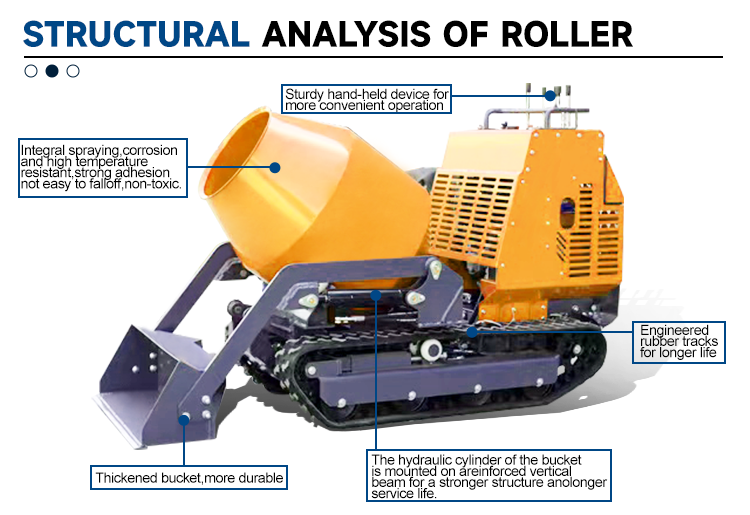
Construction professionals constantly face critical decisions about equipment that can significantly impact project timelines, budgets, and site accessibility. Among the most consequential choices is selecting the right concrete mixing and delivery system. The comparison between crawler concrete mixer technology and traditional mixer trucks represents more than a simple equipment preference—it reflects a fundamental shift in how the construction industry approaches concrete handling in challenging environments. Understanding the distinct operational capabilities, site adaptability, and economic implications of each system empowers contractors to align equipment selection with specific project demands and terrain conditions.
The evolution from conventional mixer trucks to specialized equipment like the crawler concrete mixer reflects the construction industry's response to increasingly complex project requirements. Traditional mixer trucks have dominated concrete delivery for decades, offering proven reliability on accessible job sites with established road infrastructure. However, modern construction frequently extends into remote locations, mountainous terrain, agricultural developments, and infrastructure projects where conventional trucks cannot operate effectively. This operational gap has driven innovation in self-propelled mixing equipment designed specifically for challenging ground conditions, steep gradients, and restricted access scenarios that define contemporary construction reality.
Fundamental Design and Operational Differences
Mobility Platform and Terrain Capability
The most visible distinction between a crawler concrete mixer and traditional mixer trucks lies in their fundamental mobility platforms. Traditional mixer trucks utilize standard wheeled chassis designed primarily for paved roads and firm surfaces. These vehicles require established roadways, turning radii suitable for large trucks, and relatively flat terrain for safe operation. The wheeled design optimizes highway transport efficiency but inherently limits off-road capability and restricts access to undeveloped sites.
In contrast, the crawler concrete mixer employs a tracked undercarriage similar to excavators and bulldozers, distributing weight across a broader surface area. This tracked design dramatically reduces ground pressure, enabling operation on soft soils, muddy conditions, and uneven terrain where wheeled vehicles would sink or lose traction. The crawler platform navigates slopes that would be impossible for traditional mixer trucks, typically handling gradients up to thirty-five degrees depending on specific model capabilities. This terrain adaptability transforms how contractors approach remote construction projects and challenging site conditions.
Mixing and Loading Methodology
Traditional mixer trucks operate primarily as transport and agitation vessels. Concrete batching typically occurs at centralized plants where precise ingredient measurement and initial mixing take place before the material loads into the truck drum. The truck maintains concrete workability during transport through continuous drum rotation, but the vehicle itself does not perform the primary mixing function. This centralized batching model requires proximity to batch plants and accessible transport routes connecting plant to project site.
The crawler concrete mixer functions as a self-contained batching and mixing unit. Operators load raw materials—aggregate, cement, water, and admixtures—directly into the machine at the job site or nearby staging area. The equipment performs complete mixing operations independently, eliminating dependence on remote batch plants. This self-loading capability proves particularly valuable in remote locations where establishing temporary batch plants or maintaining reliable delivery routes becomes economically prohibitive. The crawler concrete mixer essentially brings the batching plant to the construction site rather than transporting pre-mixed material.
Operational Autonomy and Site Logistics
Traditional mixer trucks require supporting infrastructure including batch plant access, established delivery routes, staging areas for truck maneuvering, and often dedicated personnel for coordination between plant and site. The logistical chain extends beyond the truck itself, encompassing scheduling systems, plant operations, and transport coordination. This infrastructure dependence becomes increasingly complex as project sites become more remote or terrain more challenging.
A crawler concrete mixer operates with greater autonomy, reducing dependence on external infrastructure. A single operator can manage material loading, mixing, transport across difficult terrain, and placement at pour locations. This operational independence streamlines logistics particularly on smaller projects or distributed work sites where establishing complex delivery systems proves inefficient. The equipment's self-sufficiency allows contractors to maintain concrete production even when batch plant access becomes temporarily unavailable due to weather, road conditions, or scheduling conflicts.
Performance Analysis Across Project Scenarios
Volume Capacity and Production Scale
Traditional mixer trucks dominate high-volume concrete delivery scenarios. Standard trucks transport seven to twelve cubic meters per load, with some large-capacity models reaching fourteen cubic meters. For major infrastructure projects, commercial developments, and large-scale construction requiring continuous concrete placement, traditional mixer trucks provide unmatched volumetric efficiency. Multiple trucks operating in rotation can deliver hundreds of cubic meters daily, supporting the demanding pour schedules that characterize major construction operations.
The crawler concrete mixer typically handles smaller batch volumes, generally ranging from one to four cubic meters depending on model size. This smaller capacity suits distributed work environments, rural construction, agricultural building projects, and infrastructure maintenance where continuous high-volume delivery proves unnecessary or impractical. The equipment excels in scenarios requiring flexibility over raw throughput—situations where producing precisely needed quantities at multiple locations throughout a work day provides more value than maximizing single-pour volume.
Access Limitations and Site Suitability
Traditional mixer trucks require specific site conditions for effective operation. Adequate road width for truck passage, sufficient turning radius at delivery points, firm ground capable of supporting heavy axle loads, and overhead clearance for the mixing drum all constitute essential prerequisites. Sites lacking these conditions either require extensive preparation—temporary road construction, ground stabilization, vegetation clearing—or become inaccessible to conventional delivery methods. Many rural, mountainous, and undeveloped locations fail to meet these access requirements without significant investment.
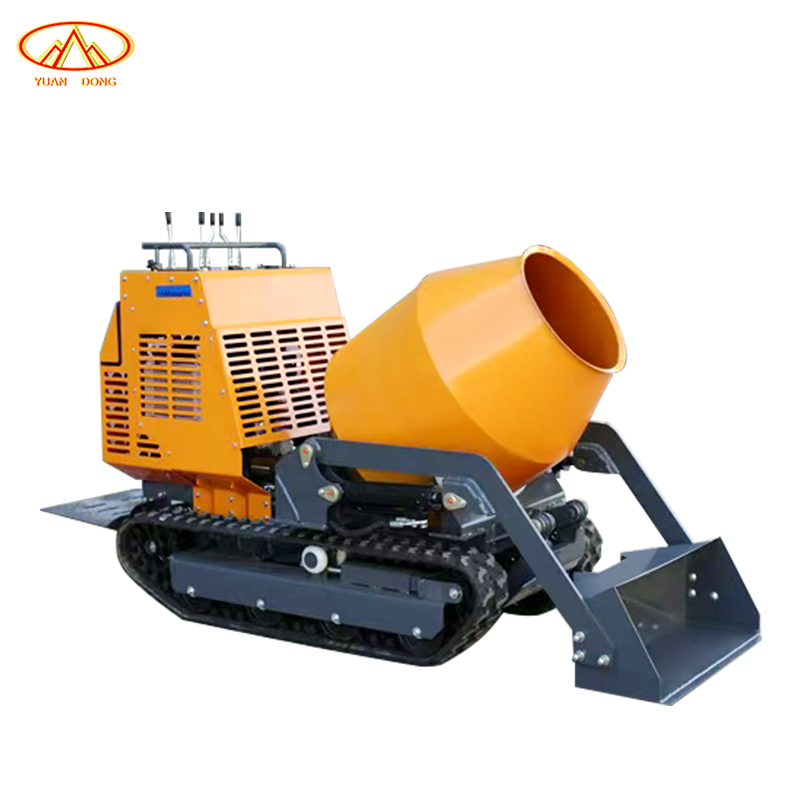
The crawler concrete mixer addresses precisely these access-challenged scenarios. The tracked platform traverses narrow paths, negotiates steep slopes, crosses soft ground, and operates in confined spaces where traditional trucks cannot enter. Construction projects in mountainous regions, agricultural developments distant from paved roads, remote infrastructure installations, and renovation projects with restricted access all benefit from this enhanced mobility. The equipment transforms previously problematic locations into feasible work sites without requiring extensive access infrastructure development.
Operational Cost Structures
Cost analysis between traditional mixer trucks and crawler concrete mixer systems reveals different economic profiles suited to distinct project contexts. Traditional mixer trucks benefit from well-established supply chains, widespread service networks, and operational models refined over decades. Per-cubic-meter delivery costs reach optimal efficiency at high volumes with short transport distances. However, costs escalate significantly when projects require extensive travel, frequent small deliveries, or substantial site preparation for truck access.
The crawler concrete mixer presents higher initial equipment investment but potentially lower operational costs in appropriate applications. Eliminating batch plant dependency, reducing transport requirements, and minimizing site preparation needs can generate substantial savings on remote or access-limited projects. The equipment particularly demonstrates economic advantages when contractors face recurring work in challenging terrain, allowing the initial investment to amortize across multiple projects. Operational independence also reduces scheduling complexity and coordination costs that accompany traditional delivery systems.
Technical Capabilities and Functional Considerations
Mix Quality Control and Consistency
Traditional mixer trucks benefit from centralized batch plant operations where sophisticated control systems precisely measure ingredients, automated processes ensure consistency, and quality control personnel monitor output. This centralized approach typically delivers superior mix uniformity and tight specification compliance, particularly important for structural concrete requiring specific strength characteristics and performance properties. The established quality assurance systems surrounding batch plant operations provide confidence for critical applications and projects with stringent specifications.
The crawler concrete mixer places greater responsibility on operator skill for achieving consistent mix quality. While modern units incorporate measurement systems and mixing controls, the decentralized batching approach introduces more variability compared to plant operations. This characteristic makes crawler concrete mixer technology most appropriate for applications where moderate specification tolerances are acceptable—foundation work, agricultural construction, road base preparation, and general building applications. Contractors using this equipment must establish reliable material sourcing and operator training protocols to maintain adequate quality standards.
Environmental Adaptability and Weather Resilience
Traditional mixer trucks face significant limitations during adverse weather conditions. Mud, snow, and ice severely restrict truck mobility, often halting concrete delivery entirely during weather events. Seasonal construction windows in northern climates directly correlate with road conditions suitable for heavy truck traffic. Extended rainy periods can delay projects for weeks when conventional delivery systems cannot access sites with deteriorated ground conditions.
The crawler concrete mixer demonstrates superior environmental adaptability, maintaining operational capability through conditions that ground traditional delivery systems. The tracked platform's traction and weight distribution enable work continuation during wet weather, in muddy conditions, and across snow-covered terrain. This weather resilience extends construction seasons and reduces weather-related delays, particularly valuable in regions with limited favorable weather windows. Projects in areas with unpredictable conditions or extended rainy seasons gain scheduling reliability that traditional systems cannot match.
Operational Flexibility and Multi-Functionality
Traditional mixer trucks serve a dedicated purpose—transporting and maintaining concrete workability during delivery. This specialization optimizes efficiency for that specific function but provides no operational flexibility beyond concrete transport. Equipment utilization correlates directly with concrete delivery demand, and trucks remain idle during project phases not requiring continuous concrete placement.
Many crawler concrete mixer designs incorporate additional functionality beyond basic mixing and transport. The mobile platform often accommodates dump body configurations, enabling material transport and placement for aggregates, soil, and other construction materials. Some models integrate loading mechanisms that facilitate material handling beyond concrete production. This multi-functionality improves equipment utilization rates across project lifecycles, generating value during phases when concrete production needs are intermittent. Contractors working on diverse projects or maintaining varied equipment fleets appreciate this operational versatility.
Strategic Equipment Selection Framework
Project Scale and Volume Requirements
The decision between traditional mixer trucks and crawler concrete mixer equipment begins with honest assessment of project concrete volume requirements. Large-scale projects consuming hundreds of cubic meters in continuous pours clearly favor traditional mixer truck systems. The volumetric efficiency and established logistics of conventional delivery cannot be matched by smaller crawler-mounted units when raw throughput determines project viability.
Conversely, projects characterized by distributed concrete needs, intermittent placement schedules, or numerous small-volume pours across extended timelines align naturally with crawler concrete mixer capabilities. Rural construction, agricultural building programs, infrastructure maintenance, and renovation projects frequently exhibit these distributed demand patterns. Equipment selection should match volume characteristics to technology strengths rather than forcing high-capacity systems into applications where flexibility matters more than throughput.
Site Access and Terrain Evaluation
Comprehensive site assessment provides critical input for equipment selection decisions. Projects with established road access, firm ground conditions, and adequate maneuvering space for large vehicles should leverage traditional mixer trucks unless specific factors override these advantages. The proven reliability and efficiency of conventional systems make them the default choice when site conditions permit their use.
Projects facing significant access challenges—remote locations, mountainous terrain, soft ground conditions, narrow access paths, or steep slopes—require alternative approaches. When site preparation costs to accommodate traditional mixer trucks approach or exceed crawler concrete mixer acquisition costs, the economic equation shifts decisively toward tracked equipment. Contractors should quantify access development expenses including temporary road construction, ground stabilization, and vegetation clearing when comparing delivery system options. Hidden costs of forcing conventional equipment into unsuitable sites often exceed the apparent savings of familiar technology.
Infrastructure Availability and Logistics
The proximity and reliability of batch plant infrastructure significantly influences equipment selection strategy. Projects located near established batch plants with reliable capacity and competitive pricing naturally favor traditional delivery methods. The mature supply chain surrounding conventional concrete delivery provides scheduling flexibility and quality assurance that self-contained systems cannot entirely replicate.
Projects in regions with limited batch plant access, areas experiencing capacity constraints, or locations where delivery charges escalate due to distance should evaluate crawler concrete mixer alternatives seriously. Remote construction, international projects in developing regions, and work in areas with infrastructure limitations may find self-contained mixing capability essential for maintaining project schedules. The strategic value of infrastructure independence increases proportionally with project remoteness and local supply chain reliability concerns.
Implementation Considerations and Operational Best Practices
Operator Training and Skill Development
Traditional mixer trucks require operators with commercial driving licenses and training in concrete handling procedures. The driving skills dominate the qualification requirements, as mixing operations at the batch plant precede driver involvement. Most construction markets maintain adequate pools of qualified concrete truck drivers, and training programs are well-established throughout the industry.
Operating a crawler concrete mixer demands a broader skill set encompassing material measurement, mixing procedures, equipment operation, and quality assessment. The operator assumes responsibilities typically distributed across batch plant personnel and truck drivers in conventional systems. This expanded role requires more comprehensive training but also creates operational efficiency by consolidating functions. Contractors implementing crawler concrete mixer technology should invest in thorough operator training programs addressing both equipment operation and concrete production fundamentals to ensure successful outcomes.
Material Sourcing and Quality Management
Traditional mixer truck systems benefit from batch plant quality control systems that ensure consistent material specifications and mix designs. Contractors rely on established relationships with concrete suppliers who maintain certified materials and documented quality assurance programs. This supply chain structure provides confidence but also creates dependency on specific suppliers and limits operational flexibility.
Crawler concrete mixer operations require contractors to establish independent material sourcing and quality verification processes. Aggregate quality, cement storage conditions, water source reliability, and admixture management all become direct contractor responsibilities. This independence provides flexibility in material sourcing and potential cost advantages through direct purchasing, but demands attention to quality management details typically handled by concrete suppliers. Successful implementation requires contractors to develop material testing capabilities and establish reliable supplier relationships for raw ingredients.
Maintenance Requirements and Service Support
Traditional mixer trucks operate within well-established service networks with readily available parts, widespread mechanical expertise, and standardized maintenance procedures. Fleet maintenance programs for conventional concrete trucks are mature and efficient, supported by decades of operational experience across the industry. Downtime management and repair logistics rarely present significant challenges for conventional equipment.
The crawler concrete mixer represents more specialized equipment with potentially more limited service networks depending on regional market maturity. Contractors should evaluate parts availability, service provider proximity, and manufacturer support capabilities before committing to tracked mixing equipment. However, the mechanically simpler design of many crawler concrete mixer models can actually reduce maintenance complexity compared to sophisticated truck systems. Preventive maintenance programs emphasizing track system care, hydraulic system monitoring, and mixing drum inspection ensure reliable operation and minimize unexpected downtime.
FAQ
What is the primary advantage of a crawler concrete mixer over traditional mixer trucks?
The primary advantage of a crawler concrete mixer is its superior terrain capability and site accessibility. The tracked undercarriage enables operation on slopes, soft ground, muddy conditions, and confined spaces where traditional mixer trucks cannot access. This mobility allows concrete production directly at remote or challenging job sites without requiring extensive access infrastructure development or dependence on batch plant delivery systems.
Can crawler concrete mixers produce the same concrete quality as batch plant systems?
Crawler concrete mixers can produce concrete suitable for most general construction applications including foundations, slabs, agricultural buildings, and infrastructure work. However, centralized batch plants typically deliver superior consistency and tighter specification control due to automated measurement systems and dedicated quality control personnel. For critical structural applications requiring precise strength characteristics and strict specification compliance, batch plant concrete remains preferable. Crawler systems work best where moderate specification tolerances are acceptable and operational flexibility provides more value than absolute consistency.
What types of construction projects benefit most from crawler concrete mixer technology?
Projects that benefit most from crawler concrete mixer technology include remote construction sites, mountainous terrain developments, agricultural building programs, rural infrastructure installations, renovation projects with restricted access, and any application where establishing reliable batch plant delivery proves economically prohibitive. The equipment particularly suits scenarios requiring distributed concrete placement across extended project timelines rather than high-volume continuous pours. Construction in regions with limited infrastructure, challenging weather conditions, or where project sites lack adequate access for conventional mixer trucks represents the ideal application profile.
Are crawler concrete mixers more expensive to operate than traditional mixer truck delivery?
The operational cost comparison depends entirely on project context. Traditional mixer trucks typically deliver lower per-cubic-meter costs for high-volume projects with good site access and proximity to batch plants. However, crawler concrete mixers can prove more economical for remote projects requiring extensive truck travel, sites needing significant access preparation, or applications with distributed small-volume concrete needs. The initial equipment investment is higher for crawler systems, but operational independence and reduced site preparation costs often generate savings on access-challenged projects. Contractors should evaluate total project costs including access development, delivery charges, and scheduling impacts rather than comparing only equipment costs.
Table of Contents
- Fundamental Design and Operational Differences
- Performance Analysis Across Project Scenarios
- Technical Capabilities and Functional Considerations
- Strategic Equipment Selection Framework
- Implementation Considerations and Operational Best Practices
-
FAQ
- What is the primary advantage of a crawler concrete mixer over traditional mixer trucks?
- Can crawler concrete mixers produce the same concrete quality as batch plant systems?
- What types of construction projects benefit most from crawler concrete mixer technology?
- Are crawler concrete mixers more expensive to operate than traditional mixer truck delivery?