All Categories

Best Applications for Crawler Concrete Mixers in Construction

2026-05-12 14:05:18
Best Applications for Crawler Concrete Mixers in Construction

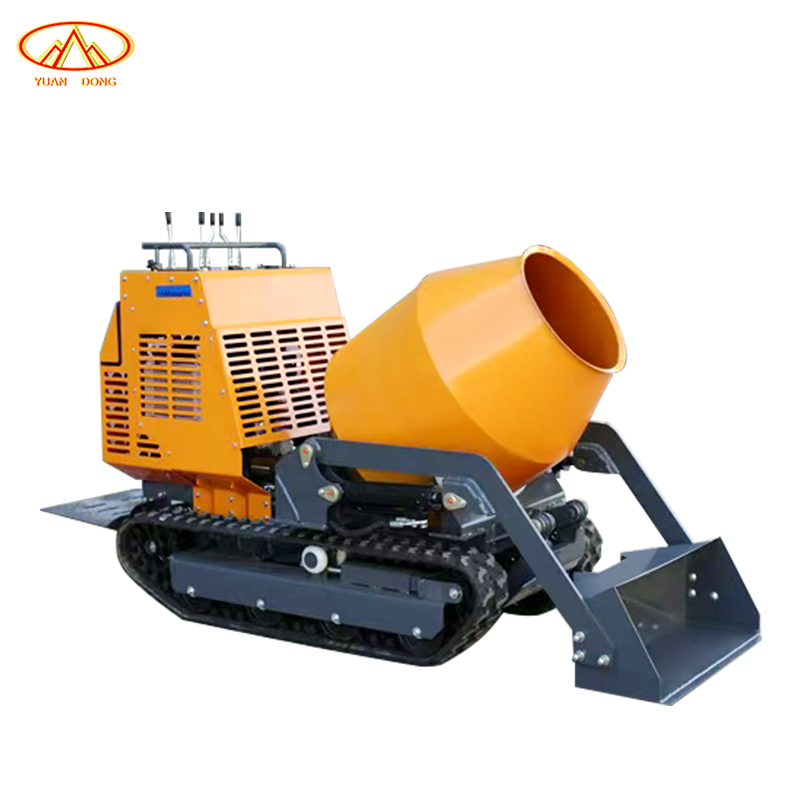
Construction projects across diverse terrains and site conditions demand equipment that combines mobility, efficiency, and versatility. The crawler concrete mixer has emerged as a transformative solution for contractors facing challenging ground conditions, confined spaces, and projects requiring on-site mixing capabilities. Unlike traditional truck-mounted mixers or stationary batching plants, this specialized equipment integrates tracked mobility with self-loading concrete mixing functionality, enabling operations in environments where conventional machinery cannot effectively perform. Understanding the optimal applications for this equipment helps construction professionals maximize productivity, reduce material waste, and overcome logistical constraints that typically delay project timelines.

The tracked undercarriage design of the crawler concrete mixer provides exceptional ground pressure distribution, making it particularly valuable for projects where soil stability, uneven topography, or restricted access would render wheeled equipment ineffective. This article examines the specific construction scenarios where crawler-type concrete mixing equipment delivers measurable advantages over alternative solutions, exploring site conditions, project types, and operational contexts that align with the unique capabilities of tracked mixing machinery. By matching equipment characteristics to application requirements, contractors can make informed procurement decisions that enhance both operational efficiency and project economics.

Remote and Rough Terrain Construction Projects

Infrastructure Development in Challenging Landscapes

Mountain roadway construction, rural bridge building, and remote infrastructure projects frequently occur in locations where conventional concrete delivery methods face significant obstacles. The crawler concrete mixer excels in these environments due to its ability to navigate steep gradients, loose soil, and unimproved access routes that would immobilize standard ready-mix trucks. When constructing mountain highways, the tracked mobility system enables the equipment to operate directly at pour locations along winding routes, eliminating dependency on continuous paved access for concrete delivery vehicles. This capability becomes particularly critical when building retaining walls, culverts, and bridge abutments in areas where establishing temporary access roads would prove cost-prohibitive or environmentally unacceptable.

The self-loading feature of the crawler concrete mixer allows operators to source aggregates from nearby stockpiles established at strategic points along the construction corridor, reducing transportation costs and delivery delays. In mountainous terrain where commercial ready-mix plants may be located hours away, the ability to produce fresh concrete on-demand at the point of use transforms project logistics. The equipment's low ground pressure distribution prevents rutting and soil compaction issues common with heavy wheeled vehicles, preserving the integrity of temporary haul roads and minimizing environmental impact. For projects extending across multiple kilometers of difficult terrain, deploying tracked mixing equipment can reduce concrete procurement costs by thirty to fifty percent compared to traditional delivery methods while improving schedule reliability.

Mining Site Construction and Maintenance

Active mining operations require ongoing construction and maintenance of access roads, equipment foundations, processing facility structures, and tailings containment systems, often in locations far from established concrete suppliers. The crawler concrete mixer provides mining contractors with autonomous mixing capability that operates independently of external supply chains, a critical advantage when working in remote extraction sites. The equipment can navigate the uneven, often muddy or rocky ground conditions typical of mining environments, positioning itself precisely where concrete placement is required for shotcrete applications, foundation pours, or roadway repairs. This mobility eliminates the need for extensive site preparation that would otherwise be necessary to accommodate standard concrete trucks.

Mining projects frequently involve phases where concrete requirements are intermittent rather than continuous, making scheduled ready-mix deliveries inefficient and expensive due to minimum order quantities and long-distance hauling charges. A crawler concrete mixer enables on-demand production scaled precisely to immediate needs, reducing material waste and eliminating the rush to place concrete before it exceeds workability limits. The equipment's ability to operate in dust-laden, abrasive conditions typical of mining sites, combined with its capacity to work extended shifts in isolated locations, makes it particularly suitable for maintenance operations that cannot afford production downtime while awaiting concrete deliveries. For open-pit mining operations requiring regular road surface rehabilitation or structural repairs, tracked mixing equipment provides operational flexibility that directly supports production continuity.

Agricultural and Rural Development Projects

Large-scale agricultural infrastructure projects including irrigation canal construction, livestock facility foundations, and grain storage structures often occur in rural locations with limited concrete supply infrastructure. The crawler concrete mixer addresses the logistical challenges inherent in these projects by bringing mixing capability directly to sites that may be accessed only by farm roads unsuitable for heavy commercial vehicles. When constructing concrete-lined irrigation channels that may extend several kilometers across agricultural land, the tracked equipment can travel along the channel alignment, mixing and placing concrete in a continuous operation that eliminates coordination complexities with multiple ready-mix deliveries.

Rural construction projects typically face constraints regarding available working hours due to seasonal weather patterns and agricultural calendars that limit site access during planting or harvest periods. The operational independence provided by a crawler concrete mixer allows contractors to work flexible schedules aligned with agricultural cycles, producing concrete when conditions permit without depending on commercial batch plant operating hours. The equipment's relatively compact footprint and ability to operate from decentralized aggregate stockpiles minimizes disruption to ongoing farming operations, an important consideration when working on active agricultural properties. For rural electrification projects requiring numerous pole foundations or small structures distributed across wide areas, tracked mixing equipment provides a mobile production capability that dramatically reduces logistics costs compared to coordinating multiple small concrete deliveries to dispersed locations.

Urban Renovation and Confined Space Applications

Historic District and Downtown Redevelopment

Renovation projects in historic urban districts often face severe access restrictions due to narrow streets, weight-limited roadways, and regulations protecting historic infrastructure from heavy vehicle traffic. The crawler concrete mixer offers a solution for projects requiring concrete placement in locations where standard ready-mix trucks cannot navigate or are prohibited from operating. When renovating structures in pedestrian-focused historic areas, the equipment's ability to traverse narrow passages and operate in confined spaces enables concrete work to proceed without requiring street closures or temporary road reinforcement that would be necessary for conventional concrete trucks. The tracked mobility system distributes weight across a larger surface area, reducing point loads on historic pavement and underground utilities.

画板 1(ec3ee240a2).png

Urban renovation projects frequently involve working within tight site boundaries where establishing concrete pumping operations becomes impractical due to space constraints for pump trucks and line routing challenges. A crawler concrete mixer can position itself directly adjacent to placement locations, mixing concrete in small batches that match the pace of hand placement or small equipment operations typical of renovation work. This capability proves particularly valuable when restoring basement structures, underpinning existing foundations, or constructing new elements within existing building envelopes where access openings limit material delivery options. The equipment's operational flexibility allows contractors to work during restricted hours when street access is available, producing only the concrete volume needed for each work session and avoiding waste associated with minimum truck loads that exceed actual placement capacity.

Tunnel and Underground Construction Support

Tunnel construction projects require continuous concrete supply for lining segments, invert pours, and support structure construction, often in locations where establishing reliable ready-mix delivery proves challenging. The crawler concrete mixer serves as a versatile support equipment option for tunnel projects, capable of operating at portal areas, along access tunnels, and in staging areas where conventional concrete trucks face maneuvering limitations. When constructing access shafts or decline tunnels during the initial phases of underground projects, the tracked equipment can navigate temporary ramps and unfinished surfaces that would be hazardous for wheeled vehicles, maintaining concrete supply continuity during critical excavation support operations.

Underground construction environments often present coordination challenges when synchronizing concrete deliveries with variable excavation progress and unexpected ground conditions that affect work schedules. The on-demand mixing capability of a crawler concrete mixer provides tunnel contractors with buffer capacity that accommodates schedule variability without incurring standby charges or concrete rejection costs associated with delayed ready-mix deliveries. The equipment can be positioned near tunnel portals or in surface staging areas, producing concrete as excavation and support installation crews require it, rather than forcing construction pace to match predetermined delivery schedules. For projects involving multiple short concrete pours distributed throughout a work shift, such as rock bolt grouting, cavity filling, or repair work, tracked mixing equipment eliminates the inefficiency of ordering multiple small ready-mix loads or attempting to manage workability of large batches across extended placement periods.

Residential Subdivision Development in Constrained Sites

Residential development projects on hillside lots, infill parcels, or previously undeveloped land with challenging topography benefit from the mobility advantages of tracked concrete mixing equipment. When constructing foundations, retaining walls, and driveways on steeply sloped residential lots, the crawler concrete mixer can navigate site grades that would prevent access by standard concrete trucks, eliminating the need for expensive concrete pumping services or elaborate temporary access construction. The equipment's ability to operate on lots before final grading and paving allows foundations to be poured earlier in the construction sequence, accelerating project schedules and improving cash flow for developers.

Subdivision projects often involve numerous small concrete pours distributed across multiple lots within a compact timeframe, creating logistical challenges when coordinating ready-mix deliveries to maintain continuous crew productivity. A crawler concrete mixer enables contractors to establish a mobile batching operation that moves systematically through the development, mixing concrete at each lot as crews complete forming and preparation work. This approach eliminates waiting time between pours, reduces concrete waste from partial truck loads, and provides flexibility to adjust mix designs for specific applications such as foundation walls versus flatwork. For developments in municipalities with noise restrictions or limited hours for commercial vehicle traffic, the ability to produce concrete on-site using the tracked equipment allows work to continue during available time windows without depending on external suppliers' delivery schedules.

Specialized Construction Scenarios Requiring Operational Flexibility

Emergency Repair and Disaster Response Operations

Natural disasters and infrastructure failures create urgent needs for concrete repair work in environments where normal supply chains may be disrupted or inaccessible. The crawler concrete mixer serves as a valuable asset for emergency response teams addressing flood damage repairs, earthquake structural stabilization, and emergency roadway restoration. The equipment's ability to operate independently of commercial batch plants becomes critical when disasters damage infrastructure or create access restrictions that prevent conventional concrete delivery. During flood recovery operations requiring levee repairs, channel restoration, or foundation stabilization, tracked mixing equipment can navigate soft, saturated soils that would immobilize wheeled vehicles, bringing mixing capability directly to damaged areas requiring immediate attention.

Emergency construction scenarios often involve working in unstable conditions where crew safety depends on minimizing personnel exposure time and reducing site congestion with unnecessary vehicles and equipment. The self-contained nature of a crawler concrete mixer allows small specialized repair teams to establish autonomous operations with minimal equipment footprint, producing concrete on-demand as conditions permit safe placement work. The equipment can utilize locally available aggregates when supply chain disruptions limit material availability, an important capability during widespread disaster events affecting multiple communities simultaneously. For military engineering units and disaster response agencies, tracked mixing equipment provides deployable concrete production capability that supports rapid infrastructure restoration without depending on civilian supply infrastructure that may be damaged or overwhelmed during crisis situations.

Precast Component Production in Decentralized Locations

Construction projects in remote locations sometimes benefit from establishing temporary precast component production near the job site rather than transporting finished elements long distances over inadequate roads. The crawler concrete mixer supports decentralized precasting operations by providing flexible mixing capability for producing concrete blocks, drainage elements, small structural components, and specialty items required for project-specific applications. When constructing in regions where commercial precast plants are unavailable or transportation costs make factory-produced components economically unfeasible, on-site precasting using tracked mixing equipment offers an alternative that reduces material costs while maintaining quality control.

Large infrastructure projects such as hydroelectric facilities, remote military installations, or resource extraction complexes often require substantial quantities of standardized concrete elements that could be efficiently produced on-site if mixing capability were available. A crawler concrete mixer enables contractors to establish temporary precasting yards adjacent to construction sites, utilizing local labor and materials to produce components that would otherwise require long-distance hauling. The equipment's mobility allows it to service multiple casting beds or forms distributed across a precasting area, mixing batches scaled to specific component requirements and minimizing material waste. For projects in developing regions where establishing permanent precast facilities is not economically justified but standardized components would improve construction efficiency, tracked mixing equipment provides an intermediate solution that captures many benefits of precasting without requiring major capital investment in stationary production facilities.

Environmental Remediation and Containment Projects

Environmental cleanup projects involving soil stabilization, contaminated site capping, and containment structure construction occur in locations where minimizing ground disturbance and controlling access are critical objectives. The crawler concrete mixer's low ground pressure and ability to operate without requiring improved access routes make it suitable for remediation projects where protecting soil integrity and preventing contaminant spread are paramount concerns. When constructing containment barriers around contaminated sites or stabilizing contaminated soils through cement-based treatment, the tracked equipment can work directly within controlled areas, mixing and placing cementitious materials without requiring extensive site preparation that could mobilize contaminants or compromise containment effectiveness.

Remediation projects often involve working with specialized mix designs incorporating additives, pozzolanic materials, or specific cement types required to achieve chemical stabilization or containment objectives. The mixing flexibility of a crawler concrete mixer accommodates these specialized applications more readily than standard ready-mix operations, where batch plant operators may be unfamiliar with unusual mix requirements or reluctant to handle specialty materials that could contaminate equipment. The ability to conduct mixing operations within the remediation site perimeter reduces risk of cross-contamination between clean and contaminated areas that could occur when conventional concrete trucks enter and exit controlled zones multiple times. For projects requiring continuous monitoring and documentation of mix proportions and placement activities for regulatory compliance, the localized operation of tracked mixing equipment simplifies quality control procedures and provides better traceability than coordinating with external concrete suppliers.

Industrial and Commercial Project Applications

Manufacturing Facility Expansion and Modification

Operating industrial facilities requiring expansion or modification face unique constraints when adding concrete structures or equipment foundations within active production environments. The crawler concrete mixer provides a solution for projects where bringing large concrete trucks into operating facilities presents safety hazards, production disruption risks, or physical access limitations. When installing new equipment foundations in existing manufacturing buildings, the tracked equipment can navigate through standard industrial doorways and position itself in congested production areas where conventional concrete delivery would be impossible. The ability to mix concrete on-site in controlled batches allows construction work to proceed during production downtime windows without requiring extended facility shutdowns to accommodate concrete deliveries.

Industrial facility projects often involve specialized concrete applications such as chemical-resistant floor toppings, vibration-isolated equipment pads, or high-strength anchor bolt embedments that require precise mix control and small batch sizes. A crawler concrete mixer accommodates these specialized requirements more effectively than trying to coordinate custom mixes through commercial suppliers who may lack familiarity with industrial application requirements. The equipment enables maintenance teams to maintain in-house capability for ongoing facility modifications, producing concrete as needed for incremental projects without the lead time and minimum order constraints associated with ready-mix procurement. For facilities in industrial parks or manufacturing zones where concrete supplier access may be limited due to security protocols or operational restrictions, owning or leasing tracked mixing equipment provides operational independence that supports continuous improvement initiatives and responsive maintenance capabilities.

Port and Marine Structure Construction

Port facility construction and marine structure projects present challenging working conditions involving tidal influences, soft soils, and restricted access to active operational areas. The crawler concrete mixer addresses these challenges through its ability to operate on unstable ground conditions and navigate areas where conventional concrete trucks cannot safely travel. When constructing wharf structures, bulkheads, or port facility foundations, the tracked equipment can work on reclaimed land and uncompacted fill areas during early construction phases before site conditions can support heavy wheeled traffic. The equipment's mobility allows it to reposition as tidal conditions change, maintaining productivity during available working windows between tide cycles.

Marine construction projects frequently require placing concrete in locations accessible only via temporary work bridges, causeways, or partially constructed structures that cannot support the concentrated axle loads of ready-mix trucks. A crawler concrete mixer's distributed weight and tracked mobility enable it to traverse these temporary access systems, bringing mixing capability directly to placement locations over structures that would fail under conventional concrete truck loading. The ability to produce concrete on-demand becomes particularly valuable for tidal pour operations where placement must occur during specific tide windows, eliminating risks of rejected concrete loads if ready-mix deliveries arrive outside the available working period. For port expansion projects in operating facilities where construction must proceed around continuing cargo operations, tracked mixing equipment provides flexibility to work in congested areas and adapt to changing access conditions as operational requirements fluctuate.

Renewable Energy Installation Projects

Wind farm construction, solar field development, and other renewable energy projects typically involve installing numerous foundation elements distributed across large geographic areas, often in remote or agricultural locations. The crawler concrete mixer provides an efficient solution for these projects by enabling mobile concrete production that follows foundation installation crews across the project site. When installing wind turbine foundations that may be located kilometers apart across rural landscapes, tracked mixing equipment can relocate between foundation sites more quickly than coordinating successive ready-mix deliveries to multiple dispersed locations. The equipment can operate from aggregate stockpiles strategically positioned throughout the project area, minimizing haul distances and improving overall construction efficiency.

Renewable energy projects often face schedule pressures related to equipment delivery dates, weather windows, and utility interconnection deadlines that make construction pace critical to project economics. The operational independence provided by a crawler concrete mixer allows contractors to maintain aggressive foundation installation schedules without depending on concrete supplier availability or delivery coordination that could become project bottlenecks. The equipment's ability to work extended hours and adapt to changing site priorities provides schedule flexibility that helps contractors recover from weather delays or accommodate changes in turbine delivery sequences. For solar field projects requiring hundreds of small foundations or ballast blocks distributed across large areas, tracked mixing equipment enables continuous production operations that keep pace with rapid array installation methods, supporting accelerated construction approaches that minimize financing costs and advance project revenue generation.

FAQ

What distinguishes crawler concrete mixers from standard mobile concrete equipment?

A crawler concrete mixer combines tracked undercarriage mobility with self-loading mixing capability, enabling operation on rough terrain, soft ground, and steep slopes where wheeled equipment cannot function effectively. Unlike standard mobile mixers with pneumatic tires, the tracked design distributes machine weight across a larger ground contact area, reducing ground pressure and preventing soil rutting or equipment immobilization in challenging site conditions. The self-loading feature allows operators to charge the mixing drum directly from aggregate stockpiles without requiring separate loading equipment, creating an autonomous mixing system particularly valuable for remote or confined work sites. This combination of capabilities makes tracked mixing equipment fundamentally different from either truck-mounted transit mixers that depend on paved access or stationary batch plants that lack mobility.

How does the operational cost structure compare to ready-mix concrete procurement?

The economic comparison between owning or leasing a crawler concrete mixer versus procuring ready-mix concrete depends heavily on project characteristics including location, volume requirements, and delivery logistics. For projects using more than approximately two hundred cubic meters of concrete in remote locations where ready-mix delivery costs include significant travel charges, tracked mixing equipment typically achieves lower per-unit concrete costs through reduced transportation expenses and elimination of minimum load charges. The equipment becomes particularly cost-effective when projects extend over several months with variable daily concrete requirements that make scheduling efficient ready-mix deliveries challenging. However, projects near established concrete suppliers with consistent high-volume requirements may find ready-mix procurement more economical when considering equipment capital costs, operator labor, and quality control requirements associated with on-site mixing operations.

What site preparation and support requirements does tracked mixing equipment need?

Crawler concrete mixers require significantly less site preparation than conventional concrete delivery methods, but successful operation does necessitate establishing aggregate stockpiles, water supply, and cement storage accessible to the equipment. Contractors must arrange delivery of sand, gravel, and cement to project sites in quantities sufficient to support planned concrete production, typically establishing stockpile locations that allow the tracked equipment to self-load materials without requiring separate loader support. Water supply can be provided through tank trucks, temporary piping from nearby sources, or portable tanks refilled periodically depending on site conditions and production volumes. Unlike stationary batch plants, tracked equipment does not require foundations, electrical service, or permanent installation, but operators must maintain organized material storage areas and ensure quality control testing capabilities are available to verify mix proportions and concrete properties meet specification requirements.

Which project scale and duration best justify deploying crawler mixing equipment?

Projects with total concrete requirements between one hundred fifty and three thousand cubic meters extending over periods from six weeks to twelve months typically represent the optimal scale for crawler concrete mixer deployment. Below this threshold, the mobilization costs and equipment rental or purchase expenses may exceed savings compared to ready-mix procurement, while projects substantially larger or longer duration may justify investing in stationary batch plant installations that offer higher production rates. The equipment proves particularly justified for projects where access challenges, supply disruption risks, or schedule flexibility requirements create value beyond simple concrete cost comparisons. Construction programs involving multiple dispersed projects within a regional area may find tracked mixing equipment economically viable across a wider range of individual project sizes by amortizing equipment costs across several concurrent or sequential jobs that share the mobilized equipment.