
 EN
EN
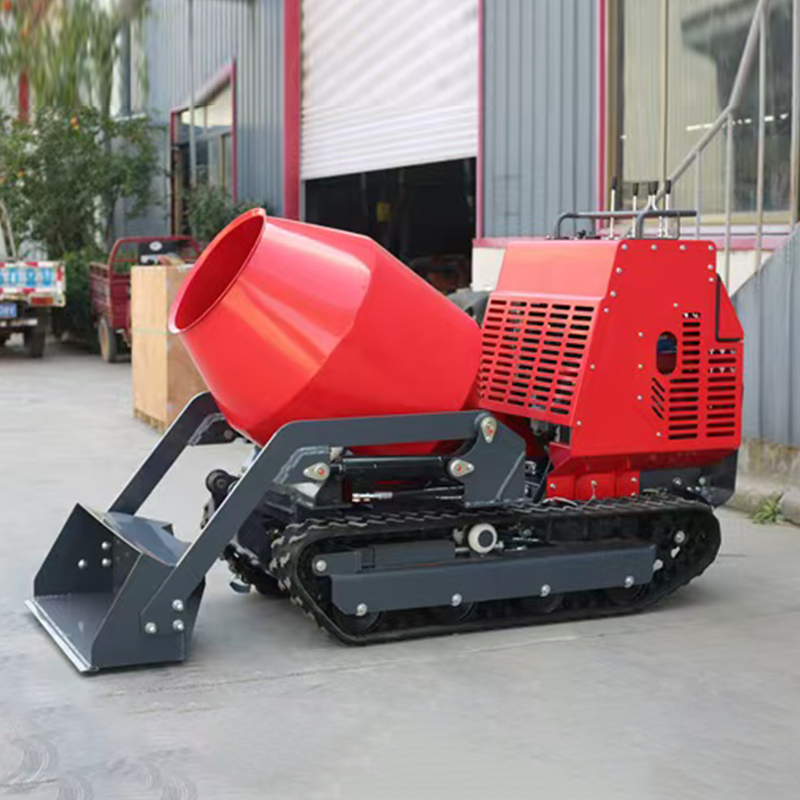
Construction projects demand equipment that can navigate challenging terrain while maintaining productivity and reliability. Crawler concrete mixers represent a specialized category of mobile mixing equipment designed to operate in environments where traditional wheeled mixers struggle or fail entirely. These tracked machines combine mobility, stability, and mixing capability in a single unit, addressing critical efficiency challenges faced by contractors working on uneven ground, steep slopes, and confined construction sites. Understanding how these machines enhance operational performance requires examining their design principles, operational advantages, and practical impact on project timelines and resource management.
The efficiency improvements delivered by crawler concrete mixers stem from their fundamental ability to eliminate common bottlenecks in concrete delivery workflows. Traditional methods require multiple pieces of equipment and coordination between mixing stations, transport vehicles, and placement teams. This fragmented approach introduces delays, quality inconsistencies, and labor inefficiencies that accumulate throughout project lifecycles. By integrating mixing and mobility functions, crawler concrete mixers streamline material handling processes, reduce equipment redundancy, and enable direct placement capabilities that fundamentally alter on-site productivity dynamics. This comprehensive examination explores the specific mechanisms through which these machines transform construction efficiency.
Mobility and Terrain Adaptability Enhancement
Tracked Propulsion System Advantages
The crawler undercarriage system fundamentally differentiates these mixers from wheeled alternatives by distributing machine weight across a larger ground contact area. This design principle reduces ground pressure to levels comparable to human footprints, typically ranging from 0.3 to 0.6 kilograms per square centimeter. The practical implication is that crawler concrete mixers can operate on soft soils, recently backfilled areas, and unprepared surfaces where wheeled equipment would sink or become immobilized. This capability eliminates the need for temporary access roads and ground preparation work that consume both time and budget on traditional projects.
The traction characteristics of tracked systems enable operation on slopes that would be unsafe or impossible for wheeled mixers. Most crawler concrete mixers maintain operational stability on grades up to 30 degrees, with some specialized models handling even steeper inclines. This slope capability allows contractors to position mixing equipment closer to placement points on hillside construction, elevated foundation work, and multi-level building projects. The reduction in horizontal transport distance translates directly to time savings, particularly on projects requiring hundreds of cubic meters of concrete across varied elevations.
Site Access and Positioning Flexibility
Construction sites frequently present access constraints that limit equipment placement options. Narrow pathways, existing structures, and staged construction sequences often create situations where only compact, maneuverable equipment can reach critical work areas. Crawler concrete mixers typically feature tight turning radiuses and narrow body widths that allow passage through restricted openings while maintaining sufficient mixing capacity for productive work. This dimensional flexibility eliminates the productivity losses associated with relay systems where concrete must be transferred between multiple handling stages.
The self-propelled nature of crawler concrete mixers enables rapid repositioning as work progresses across a site. Unlike stationary mixing plants that require crews to transport material over increasing distances, crawler mixers move with the work front, maintaining optimal positioning throughout project phases. This dynamic positioning capability proves particularly valuable on linear projects such as road construction, pipeline installations, and perimeter wall construction where work advances continuously along an extended path. The time saved through proximity maintenance accumulates to substantial efficiency gains over project durations.
Production Workflow Optimization
Integrated Mixing and Transport Functions
Traditional concrete delivery workflows separate mixing and transport functions across different equipment and operators, creating handoff points that introduce delays and quality risks. crawler concrete mixers eliminate these handoff points by combining both functions in a single machine operated by one person. This integration reduces the crew size required for concrete operations while simultaneously accelerating the production cycle. The operator loads raw materials, controls the mixing process, transports the mixed concrete, and manages discharge operations without coordinating with additional personnel or equipment.
The efficiency advantage becomes particularly pronounced on projects requiring frequent small batches rather than continuous large pours. Residential foundation work, repair projects, and utility installations often demand concrete volumes ranging from 0.5 to 3 cubic meters delivered to multiple locations throughout a workday. Crawler concrete mixers excel in these applications by eliminating the mobilization overhead associated with ready-mix truck deliveries. The machine remains on site, producing batches on demand as work progresses, avoiding the waiting periods that occur when crews must pause for scheduled deliveries or deal with unexpected material shortages.
Material Handling Efficiency
The self-loading capabilities incorporated in many crawler concrete mixer designs further streamline material management processes. Integrated loading systems allow operators to scoop aggregates, sand, and cement directly from stockpiles without requiring separate loader equipment or manual shoveling. This direct loading capability reduces the equipment fleet needed on site and eliminates the coordination delays that occur when multiple machines must share limited working space. The time saved during material loading compounds across the numerous batches produced during a typical project, generating measurable productivity improvements.
Water management represents another efficiency factor where crawler concrete mixers demonstrate operational advantages. Onboard water tanks with integrated metering systems enable precise water-cement ratio control without relying on site water supplies that may have inconsistent pressure or availability. This self-contained water management ensures consistent concrete quality while eliminating the downtime associated with connecting hoses, troubleshooting water supply issues, or relocating to access water sources. The operational independence provided by integrated water systems contributes to smoother workflow continuity throughout production cycles.
Labor Productivity and Resource Utilization
Reduced Crew Requirements
Labor costs typically represent 30 to 50 percent of total construction expenses, making crew efficiency a primary driver of project profitability. Crawler concrete mixers enable significant labor optimization by consolidating functions that traditionally require multiple operators. A single skilled operator manages the entire concrete production and placement process, from material loading through final discharge. This consolidation reduces direct labor costs while also simplifying supervision requirements and minimizing the communication challenges that arise when coordinating larger crews.
The operator efficiency extends beyond simple headcount reduction. When one person controls the entire mixing and delivery process, quality consistency improves because individual judgment and technique remain constant across all batches. Variability that creeps into traditional workflows through personnel changes, communication gaps, and inconsistent practices diminishes significantly. This consistency reduces waste from rejected batches, minimizes rework requirements, and improves overall material utilization rates that directly impact project economics.
Equipment Utilization Rates
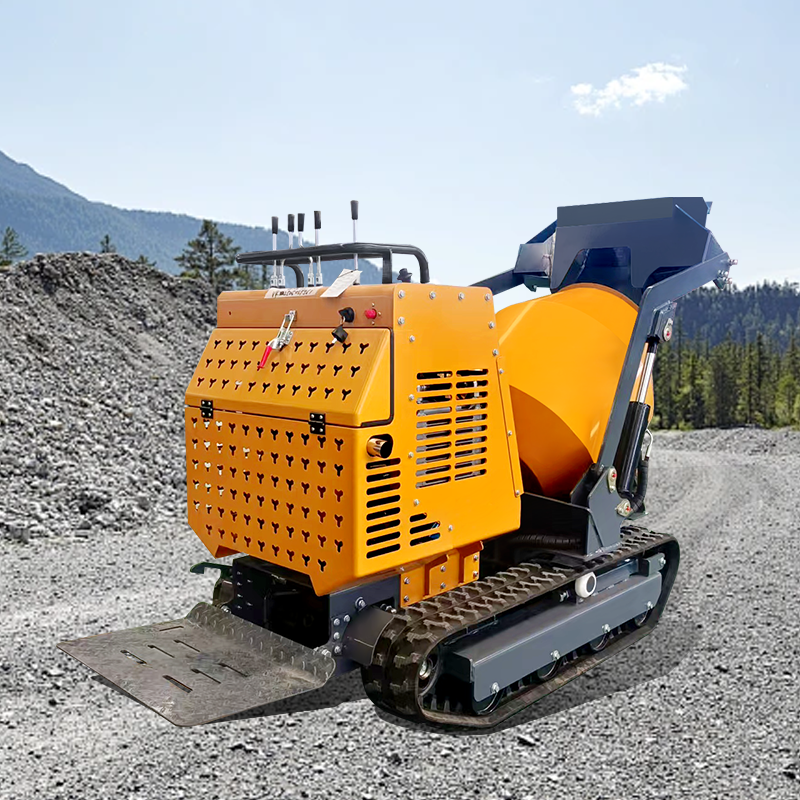
Construction equipment productivity depends heavily on utilization rates, which measure the percentage of owned or rented time that machines spend performing productive work. Crawler concrete mixers typically achieve higher utilization rates than specialized equipment that performs only mixing or only transport functions. The multi-functional nature means the machine remains productive throughout the concrete operations cycle rather than sitting idle during handoff periods or while waiting for coordination between separate mixing and transport equipment.
The mobility and positioning flexibility of crawler concrete mixers also contributes to improved utilization by reducing setup and relocation time. Traditional stationary mixers require significant time for initial positioning, utility connections, and eventual demobilization. When projects span multiple phases or locations, this setup time repeats multiple times. Crawler concrete mixers minimize these non-productive periods through quick relocation capabilities that allow the machine to move between work areas in minutes rather than hours, maintaining productive operation throughout the workday.
Quality Control and Mix Consistency
On-Demand Mixing Benefits
Concrete quality degrades over time after mixing, with workability declining and setting processes beginning within 90 minutes under typical conditions. This time constraint creates quality challenges when concrete must be mixed at distant plants and transported to job sites. Transit time consumes a portion of the available working window, and traffic delays or unexpected site access issues can result in concrete arriving with compromised properties. Crawler concrete mixers eliminate these transit-related quality risks by producing concrete immediately adjacent to placement locations, ensuring maximum workability and optimal properties at the moment of placement.
The ability to adjust mix designs in real-time based on observed site conditions represents another quality advantage. When weather changes, substrate moisture varies, or specific application requirements emerge during construction, operators can modify water content, admixture dosages, or mixing duration to optimize concrete properties for actual conditions. This adaptive capability, impossible with pre-mixed concrete delivered from distant plants, enables quality optimization that improves finished work performance and reduces the defect rates that generate costly rework.
Batch Consistency and Traceability
Modern crawler concrete mixers increasingly incorporate weighing systems and batch controllers that ensure consistent proportioning across multiple production cycles. These systems eliminate the variability associated with manual material measurement and provide documented records of mix proportions for quality assurance purposes. The automated batching improves consistency between successive loads, ensuring uniform concrete properties throughout a pour and across project phases. This consistency proves particularly valuable on projects where strength uniformity and appearance consistency affect structural performance or aesthetic outcomes.
The localized production enabled by crawler concrete mixers also improves material traceability and quality documentation. When concrete comes from multiple ready-mix suppliers or different batch plants, tracking the source and properties of material in specific structural elements becomes complex. On-site mixing with crawler equipment creates clear documentation of exactly when and where each batch was produced and placed, simplifying quality control processes and providing definitive records for compliance verification or future reference.
Project Timeline and Cost Impact
Schedule Acceleration Mechanisms
Construction schedules depend on critical path activities where delays directly extend project completion dates. Concrete work frequently appears on project critical paths, making the speed of concrete operations a key determinant of overall timeline performance. Crawler concrete mixers accelerate concrete operations through multiple mechanisms: elimination of waiting periods for scheduled deliveries, reduction of material handling steps, faster positioning and repositioning, and continued operation during conditions that would halt delivery truck access. These acceleration factors compound across project durations, often enabling completion weeks earlier than schedules based on traditional concrete delivery methods.
The independence from external suppliers also eliminates schedule uncertainties associated with concrete availability. During periods of high construction activity, ready-mix suppliers may face capacity constraints that force contractors to accept inconvenient delivery times or experience delays waiting for available trucks. Crawler concrete mixers eliminate this dependency, allowing contractors to control their own production schedules and maintain progress regardless of supplier capacity limitations. This scheduling autonomy proves particularly valuable on fast-track projects where maintaining momentum determines success or failure.
Direct and Indirect Cost Reductions
The direct cost savings from crawler concrete mixers include reduced labor expenses, elimination of concrete delivery charges, and decreased equipment rental costs through consolidation of functions. These direct savings typically range from 15 to 30 percent compared to traditional concrete delivery methods, with exact figures depending on project characteristics, site conditions, and local market rates. The savings increase on remote projects where concrete delivery involves long haul distances and associated premium pricing, or on projects with difficult access where delivery trucks require escorts, special routing, or road maintenance agreements.
Indirect cost benefits often exceed direct savings through mechanisms less visible in simple cost comparisons. Reduced project duration lowers overhead costs, enables earlier revenue recognition, and frees equipment and personnel for subsequent projects. Quality improvements reduce rework costs and warranty exposure. Enhanced safety from reduced truck traffic and material handling decreases incident costs and experience modification rates. Simplified logistics reduce management burden and improve project team focus. When these indirect benefits are quantified through comprehensive project analysis, the total economic advantage of crawler concrete mixers often reaches 25 to 40 percent compared to traditional approaches.
FAQ
What production capacity do crawler concrete mixers typically provide compared to traditional mixing methods?
Most crawler concrete mixers offer batch capacities between 1.0 and 4.0 cubic meters, with production rates ranging from 10 to 25 cubic meters per hour depending on model specifications and operating conditions. While this capacity is lower than large stationary batch plants, the elimination of transport time and loading delays means that effective on-site productivity often matches or exceeds traditional methods for projects requiring up to 100 cubic meters per day. The productivity advantage becomes most pronounced on sites with difficult access or when work is distributed across multiple locations, where crawler mixers maintain consistent output while traditional methods experience significant non-productive time.
How do crawler concrete mixers perform in extreme weather conditions or challenging environmental situations?
The enclosed mixing drums and self-contained systems of crawler concrete mixers provide better environmental protection than open mixing methods, allowing operation in light rain and dusty conditions that would compromise other approaches. The tracked mobility maintains functionality in muddy or snowy conditions where wheeled equipment loses traction. However, extreme cold below minus 10 degrees Celsius requires pre-heating measures for mixing water and may reduce hydraulic system efficiency, while extreme heat above 40 degrees Celsius necessitates more frequent cooling breaks and may require chilled mixing water to maintain proper concrete temperature. The machines generally handle environmental challenges better than delivery truck systems that depend on maintained road conditions and may refuse service during weather events.
What maintenance requirements and operational costs should contractors expect with crawler concrete mixer equipment?
Routine maintenance for crawler concrete mixers follows predictable schedules centered on engine service, hydraulic system inspection, track tension adjustment, and mixing drum cleaning. Daily cleaning of the mixing drum after use prevents concrete buildup that reduces capacity and mixing efficiency. Engine oil changes typically occur every 250 operating hours, with hydraulic fluid replacement at 1000-hour intervals. Track systems require tension checking every 100 hours and may need replacement after 2000 to 3000 hours depending on operating conditions and terrain. Total maintenance costs generally run 8 to 12 percent of initial equipment cost annually, comparable to other mobile construction equipment. Fuel consumption averages 8 to 15 liters per hour depending on engine size and workload, with total operating costs including maintenance, fuel, and operator wages typically ranging from 35 to 55 dollars per operating hour.
Can crawler concrete mixers handle specialized concrete mixes including fiber-reinforced and high-performance formulations?
Modern crawler concrete mixers accommodate most standard concrete mix designs including those incorporating fibers, plasticizers, accelerators, and other common admixtures. The mixing action provided by rotating drums with internal blades effectively distributes fibers and ensures thorough admixture integration when materials are added in proper sequence. However, some highly specialized mixes with extreme workability requirements, very short set times, or unusual aggregate characteristics may require batch plant equipment with more precise environmental controls and specialized mixing geometries. For typical construction applications including most fiber-reinforced concrete, self-consolidating mixes of moderate workability, and colored concrete, crawler concrete mixers deliver mixing quality equivalent to stationary plants while providing the additional benefit of immediate placement that preserves optimal concrete properties.
Table of Contents
- Mobility and Terrain Adaptability Enhancement
- Production Workflow Optimization
- Labor Productivity and Resource Utilization
- Quality Control and Mix Consistency
- Project Timeline and Cost Impact
-
FAQ
- What production capacity do crawler concrete mixers typically provide compared to traditional mixing methods?
- How do crawler concrete mixers perform in extreme weather conditions or challenging environmental situations?
- What maintenance requirements and operational costs should contractors expect with crawler concrete mixer equipment?
- Can crawler concrete mixers handle specialized concrete mixes including fiber-reinforced and high-performance formulations?