
 EN
EN
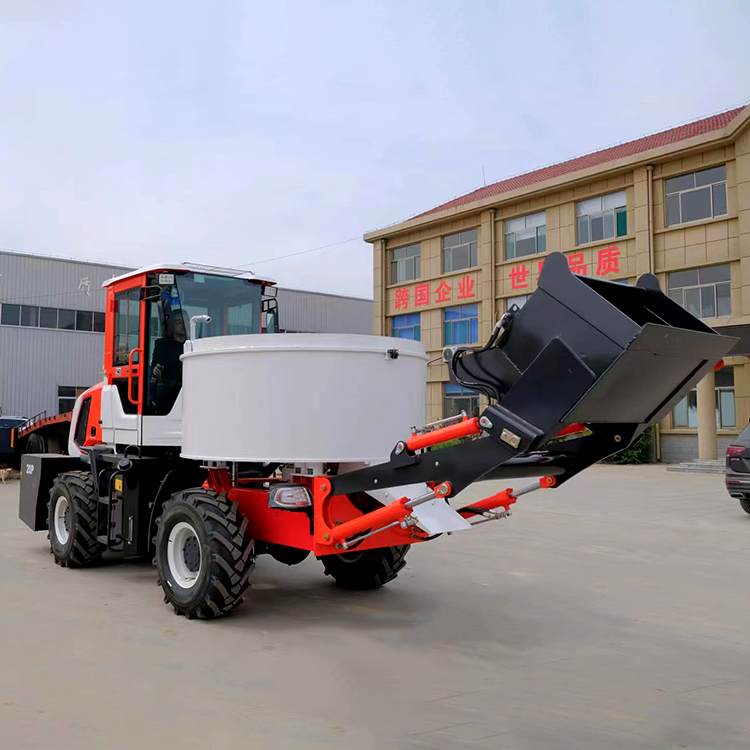
Labor costs represent one of the most significant operational expenses in construction and concrete production operations. As project managers and contractors face mounting pressure to control budgets while maintaining productivity, equipment choices become increasingly critical. The self loading concrete mixer truck has emerged as a transformative solution that directly addresses labor expense challenges by fundamentally changing how concrete mixing and delivery operations are staffed and executed.
Traditional concrete operations typically require multiple workers for material loading, mixing supervision, transportation, and discharge coordination. Each of these stages demands specialized attention and adds to the overall payroll burden. The self loading concrete mixer truck consolidates these functions into a single integrated platform that dramatically reduces the number of personnel needed to complete concrete delivery tasks. This operational efficiency translates directly into measurable labor cost reductions that improve project profitability and competitive positioning in the construction marketplace.
Consolidation of Multiple Labor Roles into Single Operator Control
Elimination of Separate Loading Personnel
Conventional concrete operations require dedicated workers to manage material loading from stockpiles into mixing equipment. This labor-intensive process involves manual or mechanized transfer of aggregates, cement, and water into separate components before mixing begins. The self loading concrete mixer truck integrates a front-loading mechanism operated from the driver's cab, enabling a single operator to control material intake without additional ground crew. This design eliminates the need for loader operators, material handlers, and supervisory personnel traditionally assigned to batching areas.
The hydraulic loading system built into the self loading concrete mixer truck allows precise control over ingredient proportions while the operator remains in the protected cab environment. This capability removes the coordination challenges that arise when multiple workers must communicate across noisy jobsites during material preparation. The time savings from eliminating handoffs between loading and mixing stages further amplifies labor efficiency, as operators complete tasks sequentially rather than waiting for separate crew members to finish their assigned duties.
Projects that previously required three to four workers for material preparation can now operate with a single trained operator managing the entire intake process. This workforce reduction generates immediate payroll savings while maintaining the same concrete output volume. The simplified labor structure also reduces complexity in scheduling, training requirements, and supervision overhead that accompanies larger crew deployments.
Integration of Transport and Mixing Functions
Traditional concrete delivery separates mixing and transportation into distinct operations requiring different equipment and operators. Stationary mixers produce concrete that must be loaded into separate transit mixers or trucks, creating redundant handling and necessitating coordination between mixing plant operators and drivers. The self loading concrete mixer truck performs mixing during transit to the pour location, eliminating the need for separate mixing facility operators and reducing the total workforce required for concrete delivery operations.
This functional integration proves particularly valuable in remote or distributed project sites where establishing fixed batching plants would be impractical. Instead of maintaining staffing for both a central mixing facility and a fleet of delivery vehicles, contractors deploy self loading concrete mixer truck units that handle complete concrete preparation independently. Each unit operates with a single driver who manages loading, mixing, transport, and discharge without requiring support from additional personnel at any stage of the process.
The mobility advantage of the self loading concrete mixer truck extends labor savings beyond direct operational roles. Projects avoid the need for site setup crews, utility connection specialists, and dismantling teams associated with temporary batching plants. The self-contained nature of these machines means operators arrive at material sources, prepare concrete according to specifications, and deliver directly to pour locations without establishing fixed infrastructure that demands ongoing maintenance and supervision labor.
Automated Mixing Control Reducing Supervision Needs
Quality control in concrete production traditionally requires experienced technicians to monitor mixing parameters, adjust water content, and verify consistency throughout batching operations. These supervisory roles add labor costs while creating potential points of failure when personnel availability fluctuates. The self loading concrete mixer truck incorporates automated mixing controls with preset programs that maintain consistent mixing ratios and timing without constant human intervention.
Operators simply select the desired concrete specification from programmed options, and the system manages drum rotation speed, mixing duration, and ingredient sequencing automatically. This automation reduces dependence on specialized mixing technicians whose expertise commands premium wages in competitive labor markets. The consistency delivered by automated systems also minimizes waste from off-specification batches that would otherwise require disposal and remixing with associated labor costs.
Projects benefit from reduced quality assurance staffing as well, since the self loading concrete mixer truck produces uniform results that require less frequent testing and adjustment. The documentation capabilities built into modern units provide digital records of mixing parameters that satisfy regulatory requirements without manual logging by dedicated personnel. These combined automation features transform concrete production from a labor-intensive technical process into a streamlined operation manageable by standard equipment operators.
Reduction in Support Personnel and Ancillary Labor Requirements
Decreased Need for Material Handling Equipment Operators
Conventional concrete production sites employ front-end loader operators, conveyor system attendants, and material transfer equipment operators to move aggregates and cement between storage areas and mixing equipment. Each of these roles represents ongoing labor costs including wages, benefits, training, and supervision. The self loading concrete mixer truck approaches material sources directly and uses its integrated loading mechanism to gather ingredients without requiring separate handling equipment or operators.
This direct loading capability eliminates the capital and operational costs associated with maintaining a fleet of support equipment alongside the concrete production infrastructure. Projects avoid paying loader operators during idle periods between batching cycles, a common inefficiency in traditional concrete operations where support equipment must remain staffed even when mixing capacity is underutilized. The self loading concrete mixer truck operator performs material gathering only when preparing a new batch, optimizing labor utilization throughout the work shift.
The reduction in support equipment also simplifies site logistics and reduces the supervisory labor needed to coordinate multiple machines and operators. Traffic management on congested jobsites becomes less complex when fewer vehicles require choreographed movement patterns. Safety oversight becomes more manageable with fewer pieces of equipment operating simultaneously, reducing the staffing requirements for safety personnel and project coordinators who would otherwise monitor complex multi-equipment operations.
Elimination of Batching Plant Attendants
Fixed concrete batching plants require dedicated attendants to operate control systems, monitor inventory levels, maintain equipment, and coordinate with delivery drivers. These positions represent continuous labor costs throughout project duration regardless of concrete demand fluctuations. The self loading concrete mixer truck operates as a mobile batching unit that eliminates the need for stationary plant attendants entirely.
Each self loading concrete mixer truck functions independently without reliance on central facility personnel, allowing contractors to scale operations up or down based on actual concrete demand without maintaining minimum staffing levels at a fixed plant. This flexibility proves especially valuable on projects with variable concrete requirements where traditional batching plants would operate inefficiently during low-demand periods while still requiring full staffing.
The distributed production model enabled by the self loading concrete mixer truck also eliminates the communication and coordination labor traditionally required between plant operators and field crews. Drivers communicate directly with pour supervisors without intermediary dispatch personnel, reducing delays and miscommunication that create labor inefficiencies. The simplified operational structure reduces administrative overhead and allows leaner management teams to oversee concrete operations effectively.
Reduced Maintenance and Cleaning Crew Requirements
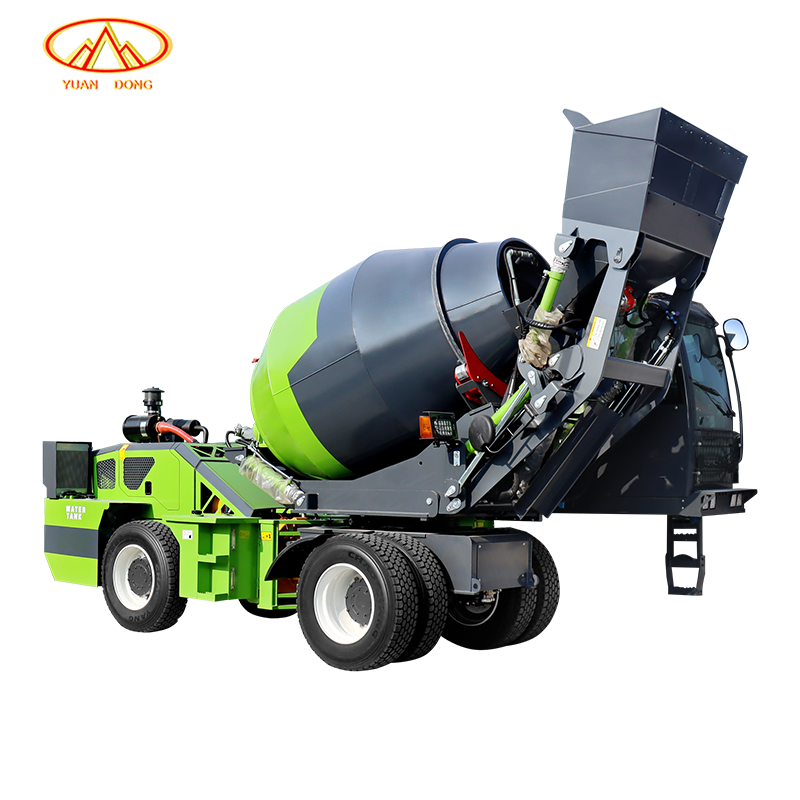
Stationary concrete mixing facilities require regular cleaning to prevent material buildup, periodic maintenance to keep multiple systems operational, and specialized technicians to service complex automated batching equipment. These maintenance activities demand dedicated personnel whose labor costs accumulate throughout project timelines. The self loading concrete mixer truck consolidates concrete production into a single mobile unit with simplified maintenance requirements manageable by standard equipment technicians.
Operators perform routine cleaning of the self loading concrete mixer truck drum between loads using integrated washing systems, eliminating the need for specialized cleaning crews that service fixed plants. The mobile nature of these units means maintenance occurs in centralized fleet facilities rather than requiring on-site service personnel at each project location. This consolidation reduces the total maintenance labor hours required across multiple simultaneous projects.
The mechanical simplicity of the self loading concrete mixer truck compared to complex automated batching plants further reduces the technical expertise required for maintenance activities. Contractors avoid the premium labor costs associated with specialized technicians who service sophisticated plant control systems, pneumatic conveyors, and automated weighing equipment. Standard diesel mechanics can service the self loading concrete mixer truck powertrains and hydraulic systems, accessing a broader labor pool at more competitive wage rates.
Operational Efficiency Gains that Multiply Labor Productivity
Faster Cycle Times with Single-Operator Workflow
Traditional concrete delivery involves multiple handoff points where work passes between different personnel, creating delays and coordination challenges that extend cycle times. The self loading concrete mixer truck enables continuous workflow controlled entirely by one operator who eliminates transition delays between loading, mixing, transport, and discharge phases. This streamlined process allows each operator to complete more delivery cycles per shift compared to traditional multi-person crews.
The productivity multiplication effect becomes substantial when calculated across full project durations. An operator who completes twelve delivery cycles daily instead of eight effectively provides fifty percent more output without increasing labor costs. This enhanced productivity allows contractors to meet concrete placement schedules with fewer total equipment units and operators than traditional methods require, reducing overall project labor budgets while maintaining delivery capacity.
The self loading concrete mixer truck design minimizes idle time that typically occurs when crew members wait for others to complete prerequisite tasks. Operators transition seamlessly from material loading to mixing to transport without coordinating with separate personnel or waiting for equipment availability. This continuous activity pattern maximizes the productive hours extracted from each labor dollar invested, improving the fundamental economics of concrete operations.
Reduced Downtime from Simplified Coordination
Complex operations involving multiple workers and equipment pieces generate frequent coordination delays as personnel wait for predecessors to complete tasks or equipment to become available. These cumulative delays reduce effective labor productivity even when workers remain on the clock. The self loading concrete mixer truck simplifies operations to single-operator control, eliminating most coordination dependencies that create unproductive time.
Projects experience fewer communication failures and misunderstandings when individual operators manage complete delivery cycles independently. The elimination of multi-party coordination removes a common source of costly mistakes that require additional labor to correct. Operators develop comprehensive understanding of their equipment capabilities and concrete specifications, reducing errors that occur when specialized knowledge fragments across multiple personnel.
The self-sufficiency of self loading concrete mixer truck operations also insulates projects from cascading delays that occur when one crew member's absence disrupts interdependent workflows. If an operator is unavailable, that specific unit remains idle without affecting other units or creating staffing gaps that compromise overall operations. This operational independence provides scheduling flexibility that reduces overtime costs and emergency staffing expenses associated with maintaining complex multi-person crews.
Lower Training and Onboarding Costs
Traditional concrete operations require training multiple specialists in different roles including plant operators, loader drivers, quality control technicians, and transit mixer operators. Each specialization demands separate training programs, certification processes, and ongoing skill development. The self loading concrete mixer truck consolidates these functions into a single operator role that requires comprehensive but unified training, reducing the total training investment needed to build capable concrete production teams.
New operators become productive more quickly when they master one integrated system rather than learning how their specialized role interfaces with multiple other positions and equipment types. The reduced training timeline accelerates return on labor investment and allows contractors to scale operations more responsively when project demands increase. The broader skill set developed by self loading concrete mixer truck operators also creates more versatile workforce members who can adapt to different equipment and project requirements.
The simplified crew structure reduces the mentoring and supervision labor traditionally required to coordinate teams of specialized workers. A single experienced operator can train new personnel through direct demonstration rather than requiring multiple mentors to teach different aspects of concrete production. This streamlined knowledge transfer reduces the indirect labor costs associated with maintaining skilled workforces across distributed project portfolios.
Strategic Labor Cost Advantages in Specific Operating Scenarios
Remote and Rural Project Sites
Projects located far from established concrete suppliers face particular labor challenges including difficulty attracting skilled workers to remote locations and the costs of housing and transporting personnel. The self loading concrete mixer truck enables concrete production with minimal on-site personnel, reducing the total workforce that must be recruited, housed, and supported in remote areas.
Each self loading concrete mixer truck operator can produce concrete independently using locally sourced aggregates and transported cement, eliminating the need for full batching plant crews in isolated locations. This capability proves especially valuable in infrastructure projects along extended corridors where establishing multiple fixed plants would require prohibitively large workforces distributed across the alignment.
The mobility of the self loading concrete mixer truck also reduces the frequency of crew rotations and personnel movements between project sites and established communities. Operators can cover larger geographic areas without requiring separate crews at each work location, reducing transportation costs and the productivity losses associated with frequent personnel mobilization and demobilization.
Projects with Variable Concrete Demand
Construction schedules often feature fluctuating concrete requirements as projects progress through different phases. Traditional batching plants require relatively constant staffing levels regardless of demand variations, creating periods of labor inefficiency when personnel remain employed during low-volume phases. The self loading concrete mixer truck fleet can scale precisely with actual concrete needs, allowing contractors to deploy only the number of operators required for current demand levels.
This scalability eliminates the carrying costs associated with maintaining full batching plant crews during slow periods or paying overtime premiums when demand suddenly increases beyond fixed plant capacity. Contractors achieve better labor cost alignment with revenue-generating concrete placement activities rather than maintaining overhead personnel whose productivity varies with project phase changes.
The flexibility extends to multi-project contractors who can reallocate self loading concrete mixer truck operators between different sites as concrete requirements shift. This dynamic resource allocation optimizes labor utilization across entire project portfolios rather than maintaining siloed crews at individual sites with mismatched staffing levels and demand patterns.
Small to Medium Volume Applications
Projects requiring modest concrete volumes often struggle with the economics of establishing dedicated batching infrastructure and staffing full production crews. The self loading concrete mixer truck provides economical concrete production at scales where traditional approaches become prohibitively labor-intensive relative to concrete output. Single operators can serve small projects completely without requiring the multi-person teams necessary for conventional batching and delivery operations.
Residential developments, small commercial buildings, and municipal infrastructure repairs represent market segments where labor costs historically consumed disproportionate shares of concrete budgets. The self loading concrete mixer truck transforms these applications into viable opportunities by aligning labor requirements with actual project scale, making small-volume concrete work profitable for contractors who previously avoided such projects due to unfavorable labor economics.
The reduced labor requirements also enable smaller contracting firms to enter concrete production activities that were previously accessible only to larger companies capable of supporting full batching plant operations. This market democratization creates competitive opportunities for regional contractors who can now provide concrete services with labor forces scaled appropriately to their business volumes and regional markets.
Long-Term Economic Impact Beyond Direct Labor Savings
Reduced Administrative and Management Overhead
Smaller crews require less complex management structures and reduced administrative support. Projects using self loading concrete mixer truck fleets need fewer supervisors, schedulers, and coordinators compared to traditional concrete operations with multiple specialized crews. This reduction in indirect labor costs amplifies the savings achieved through direct operational workforce reductions.
Payroll processing, benefits administration, and human resources activities scale with employee counts, creating administrative costs that decrease proportionally when self loading concrete mixer truck operations reduce total workforce requirements. Safety compliance becomes simpler with fewer workers to train, monitor, and document, reducing the labor devoted to regulatory compliance activities.
The simplified operational model also reduces the management attention required for concrete production activities, allowing project leadership to focus on other critical project elements rather than constantly troubleshooting coordination issues between multiple specialized crews. This improved management efficiency represents an often-overlooked labor cost benefit that contributes to overall project profitability.
Improved Labor Retention and Reduced Turnover Costs
Self loading concrete mixer truck operators develop comprehensive skills and operate sophisticated equipment, creating more engaging and professionally satisfying work compared to narrowly specialized roles in traditional concrete operations. This enhanced job quality improves employee retention rates and reduces the substantial costs associated with workforce turnover including recruiting, hiring, training, and productivity losses during new employee ramp-up periods.
Contractors who invest in training operators for self loading concrete mixer truck operations create more valuable and versatile team members who perceive greater career development opportunities. This positive employment experience reduces voluntary turnover and allows companies to build stable workforces with institutional knowledge that improves operational efficiency over time.
The reduced total workforce size also makes it economically feasible to offer more competitive compensation packages to individual operators, further improving retention while still achieving overall labor cost savings through workforce reduction. Higher-quality employment for fewer workers often proves more cost-effective than maintaining larger crews with higher turnover and associated replacement costs.
Enhanced Competitive Positioning Through Labor Efficiency
Contractors who achieve superior labor productivity through self loading concrete mixer truck deployment gain competitive advantages in bidding for projects where labor costs represent significant portions of total estimates. The ability to deliver concrete services with demonstrably lower labor requirements allows aggressive pricing while maintaining healthy profit margins that sustain business growth and investment capacity.
This competitive positioning proves particularly valuable in markets where labor availability constraints limit contractor capacity. Firms using self loading concrete mixer truck equipment can take on additional projects without proportional workforce expansion, growing revenue without encountering the labor recruitment challenges that constrain competitors using traditional methods.
The operational flexibility provided by reduced labor dependencies also improves business resilience during economic cycles when labor costs increase or skilled worker availability tightens. Contractors with efficient self loading concrete mixer truck operations maintain profitability under conditions that force competitors to decline projects or accept unprofitable work to maintain workforce employment during slow periods.
FAQ
How many workers does a self loading concrete mixer truck replace compared to traditional concrete operations?
A single operator in a self loading concrete mixer truck typically replaces three to five workers required in conventional concrete operations. Traditional setups need separate personnel for material loading, batching plant operation, transit mixer driving, and often additional workers for coordination and quality control. The integrated design of the self loading concrete mixer truck consolidates these functions under single-operator control, eliminating the multiple specialized roles while maintaining equivalent concrete production capacity. The exact labor reduction depends on specific project configurations and operational approaches, but most contractors report workforce reductions of sixty to seventy percent when transitioning from traditional methods to self loading concrete mixer truck operations.
What skill level is required to operate a self loading concrete mixer truck effectively?
Operating a self loading concrete mixer truck requires a combination of basic equipment operation skills and concrete production knowledge that most experienced construction workers can acquire through focused training programs lasting two to three weeks. Operators need commercial driving licenses appropriate to vehicle size, understanding of concrete mix design principles, and familiarity with hydraulic equipment controls. The integrated control systems simplify operation compared to coordinating multiple pieces of equipment, making the learning curve manageable for workers with general construction backgrounds. Many contractors find that training existing equipment operators or experienced concrete workers proves more efficient than hiring separately for specialized batching plant and truck driving positions, resulting in more versatile team members and reduced total training investments.
Do self loading concrete mixer trucks require specialized maintenance personnel?
Self loading concrete mixer trucks utilize standard diesel powertrains and hydraulic systems familiar to most equipment maintenance technicians, eliminating the need for specialized personnel required by complex automated batching plants. Regular maintenance can be performed by conventional diesel mechanics and hydraulic specialists already employed in most construction equipment fleets, avoiding the premium labor costs associated with batching plant control system specialists and automated weighing equipment technicians. The consolidated mechanical design actually simplifies maintenance compared to traditional setups where multiple pieces of equipment require separate service attention. Most contractors integrate self loading concrete mixer truck maintenance into existing fleet service operations without adding specialized maintenance positions, achieving further indirect labor cost savings beyond operational workforce reductions.
Can labor savings from self loading concrete mixer trucks offset higher equipment acquisition costs?
Labor savings generated by self loading concrete mixer truck operations typically recover higher initial equipment costs within twelve to twenty-four months of operation depending on utilization rates and regional labor costs. The ongoing nature of labor expenses means that workforce reductions create permanent cost advantages that accumulate throughout equipment service life, while acquisition costs represent one-time investments. Contractors in high-wage markets or remote locations with premium labor rates experience even faster payback periods as the differential between traditional multi-person crews and single-operator self loading concrete mixer truck operation becomes more pronounced. When calculating total cost of ownership, most operators find that labor savings combined with operational flexibility benefits create compelling economic returns that justify equipment investments even when purchase prices exceed traditional concrete delivery truck costs.
Table of Contents
- Consolidation of Multiple Labor Roles into Single Operator Control
- Reduction in Support Personnel and Ancillary Labor Requirements
- Operational Efficiency Gains that Multiply Labor Productivity
- Strategic Labor Cost Advantages in Specific Operating Scenarios
- Long-Term Economic Impact Beyond Direct Labor Savings
-
FAQ
- How many workers does a self loading concrete mixer truck replace compared to traditional concrete operations?
- What skill level is required to operate a self loading concrete mixer truck effectively?
- Do self loading concrete mixer trucks require specialized maintenance personnel?
- Can labor savings from self loading concrete mixer trucks offset higher equipment acquisition costs?