
 EN
EN
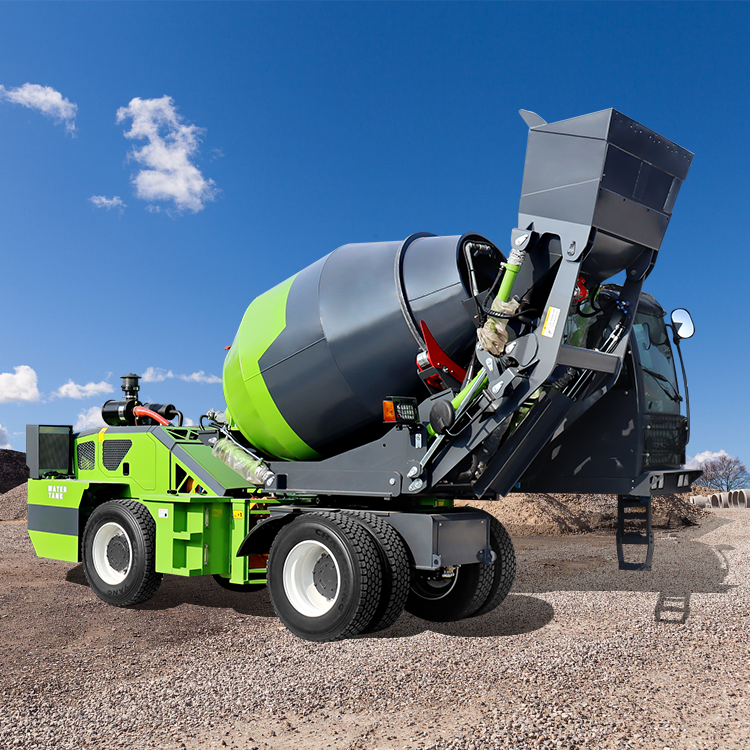
A self-loading concrete mixer has become one of the most sought-after pieces of equipment in modern construction. It combines multiple functions into a single compact machine, allowing teams to load raw materials, mix concrete, and discharge the finished product without relying on separate equipment or large crews. For contractors working on remote sites or tight-budget projects, understanding the defining features of a self-loading concrete mixer is essential before making a purchasing decision.
The self-loading concrete mixer is not simply a scaled-down version of a traditional batching plant. It is a purpose-built mobile machine designed to operate independently across a wide variety of job sites. From rural road construction and irrigation projects to rural housing and small infrastructure work, the self-loading concrete mixer delivers consistent, measurable value. This article examines the core features that make a self-loading concrete mixer stand apart from conventional mixing solutions.
Self-Loading Mechanism and Material Handling
Automated Bucket Loading System
The defining characteristic of any self-loading concrete mixer is its front-mounted self-loading bucket. This hydraulically powered bucket allows the operator to scoop aggregates such as sand, gravel, and crushed stone directly from ground-level stockpiles without manual shoveling or an additional loader machine. The self-loading concrete mixer can collect precise quantities of each aggregate in a single pass, which saves time and reduces labor costs significantly. This automated loading system is arguably the most impactful feature that separates the self-loading concrete mixer from traditional drum mixers that rely entirely on external feeding.
Integrated Water Tank and Metering System
A built-in water tank is a standard feature on every self-loading concrete mixer. This tank allows the machine to carry sufficient water for multiple batches before requiring a refill, which is especially valuable on remote construction sites where a direct water supply may not be available. The self-loading concrete mixer also uses a metered water-dosing system to ensure the correct water-to-cement ratio is maintained for each batch. Consistent water measurement is critical for producing concrete that meets structural strength requirements, and having this feature integrated directly into the self-loading concrete mixer eliminates reliance on manual estimation.
Mixing Drum Design and Rotation Capability
360-Degree Rotating Drum on Chassis
One of the most distinctive mechanical features of the self-loading concrete mixer is its rotating drum mounted on a full 270-degree or fully rotating chassis. Unlike a standard transit mixer that can only discharge from the rear, the self-loading concrete mixer can rotate its drum and position its discharge chute in almost any direction. This feature is particularly useful when working in confined spaces or when pouring concrete into forms positioned at various angles. The rotational freedom of the self-loading concrete mixer reduces the need to reposition the entire vehicle, improving on-site efficiency and reducing cycle time.
Mixing Speed and Drum Volume Options
The self-loading concrete mixer is available in multiple drum capacities, typically ranging from 1.2 cubic meters to 5.5 cubic meters per batch. The drum rotation speed can be adjusted during loading, mixing, and discharge phases, giving the operator control over concrete consistency. The self-loading concrete mixer drum is designed with internal mixing blades that ensure all materials are uniformly blended. A well-calibrated self-loading concrete mixer produces homogeneous concrete comparable in quality to plant-batched material, which is a key selling point for quality-conscious contractors.
Mobility, Drive System, and Operator Control
Four-Wheel Drive and All-Terrain Capability
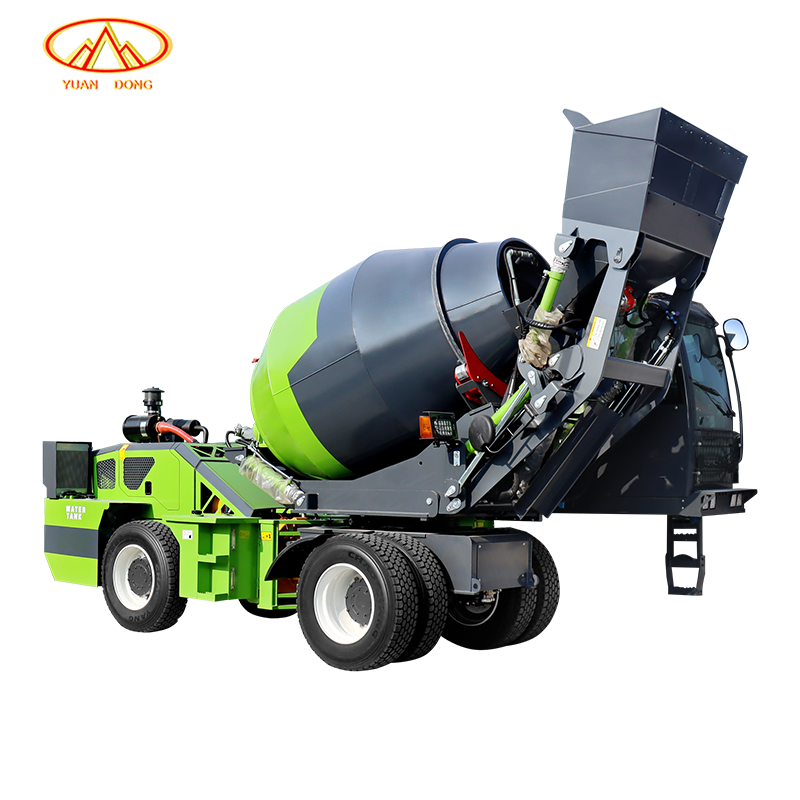
The self-loading concrete mixer is typically equipped with a four-wheel drive system that enables it to navigate unpaved roads, steep inclines, muddy terrain, and narrow construction paths. This mobility advantage is one of the primary reasons contractors prefer the self-loading concrete mixer for remote or off-road projects where standard concrete trucks cannot reach. The self-loading concrete mixer chassis is reinforced for durability under heavy loads, and the drive axles are engineered to maintain traction even when the drum is fully loaded. This combination of mobility and structural strength makes the self-loading concrete mixer a genuinely versatile asset on challenging sites.
Centralized Operator Control Panel
Modern self-loading concrete mixer models feature a centralized control cabin where a single operator can manage all machine functions. From the driver's seat, the operator of a self-loading concrete mixer can control the loading bucket, drum rotation speed, water discharge, and vehicle movement simultaneously. This single-operator design is one of the most important productivity features of the self-loading concrete mixer, as it eliminates the need for a dedicated ground crew during loading and mixing cycles. The control layout is designed to be intuitive, reducing training time and minimizing operator error.
In addition to cabin controls, many self-loading concrete mixer units are fitted with digital displays that show real-time data such as drum load, water volume, and engine status. These monitoring tools help operators maintain optimal performance across every batch. The self-loading concrete mixer with digital instrumentation is particularly valuable in projects where batch consistency and documentation are contractual requirements.
FAQ
What drum capacity should I choose for a self-loading concrete mixer?
The right drum capacity for a self-loading concrete mixer depends on the scale and pace of your project. Smaller self-loading concrete mixer models with 1.2 to 2 cubic meter drums are suited for residential and light infrastructure work, while larger 3.5 to 5.5 cubic meter models are better for road construction and commercial projects. Always match the self-loading concrete mixer capacity to your daily concrete demand to avoid inefficiencies.
Can a self-loading concrete mixer replace a traditional batching plant?
A self-loading concrete mixer can replace a batching plant in small to medium-scale projects where mobility and flexibility matter more than high-volume output. The self-loading concrete mixer produces consistent quality concrete on demand without the need for a fixed plant setup. However, for very large projects requiring hundreds of cubic meters per day, a self-loading concrete mixer is best used as a supplement rather than a full replacement.
How does the self-loading concrete mixer save labor costs on site?
The self-loading concrete mixer saves labor costs by consolidating loading, mixing, transporting, and discharging into a single machine operated by one person. Traditional concrete production requires separate equipment and multiple workers for each stage. With a self-loading concrete mixer, the workforce needed for concrete production is substantially reduced, which directly lowers payroll costs and improves overall project profitability.