
 EN
EN
Calculate Daily and Peak Concrete Demand
Estimate project volume and timeline-based daily output (m³/day)
Getting a handle on how much concrete needs to be produced begins with figuring out the total volume of the project measured in cubic meters. Take that number and divide it by how long the construction will take to get an idea of what kind of daily output is needed. Let's say we have a job that requires 10,000 cubic meters completed over 200 working days - that works out to around 50 cubic meters per day as a starting point. But wait, most plants need at least 20 to 30 cubic meters each day just to keep running smoothly according to what many in the business know from experience. Real world construction doesn't go straight ahead though. There are always those unexpected curing times which can last anywhere from seven days to nearly a month depending on weather conditions. Plus there's always some extra stock needed just in case things don't go exactly as planned. Foundations tend to create huge surges in demand sometimes tripling what was originally calculated. That's why having some flexibility in production capacity makes all the difference between keeping everything moving along nicely versus dealing with frustrating supply issues or expensive delays down the road.
Distinguish sustained vs. peak demand to avoid under- or over-sizing the concrete mixer plant
- Sustained demand reflects the average daily requirement over the full project duration—calculated as total volume divided by timeline. Sizing equipment to handle 65–75% of its rated capacity for this baseline supports long-term reliability and minimizes premature wear.
- Peak demand occurs during critical, time-concentrated phases such as foundations or slab pours—lasting days or weeks—not months. Equipment should be sized to accommodate 120–150% of baseline demand during these surges, while staying within an 85% utilization ceiling to preserve operational resilience.
- Operational strategy: Use buffer storage and intelligent batch scheduling to absorb short-term volatility. Over-specification reduces ROI when idle capacity exceeds 40%, while chronic under-capacity extends project timelines by an average of 22%.
Align Capacity with Concrete Mixer Plant Type and Configuration
Compare Stationary, Mobile, and Compact Concrete Mixer Plant Models by Rated Output (m³/h) and Scalability
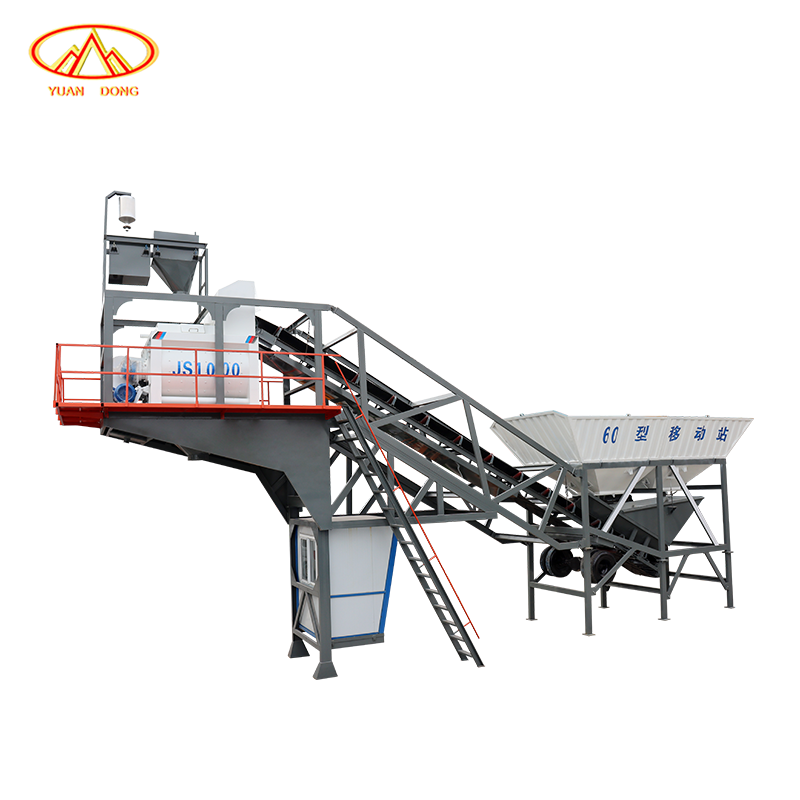
Choosing the correct concrete mixer plant really comes down to matching its hourly output rating (measured in cubic meters per hour) with what the project actually needs in terms of size, timing phases, and how accessible the construction site is. Stationary plants are definitely the workhorses here, capable of pumping out between 100 to over 300 cubic meters each hour. These setups can grow as needed thanks to extra silos, additional mixing units, and all sorts of batching system upgrades. That makes them perfect for big infrastructure projects that run for months or even years straight. Mobile options fall somewhere in the middle range at around 30 to 100 cubic meters per hour. What they lack in pure volume they make up for in being able to move from one job site to another, which works great when contractors have several smaller projects going at once. The smallest compact models handle only 10 to 30 cubic meters per hour but take up much less space. They're great for tight city environments or renovation work where room is limited. However, these little guys tend to be pretty fixed in their setup, so expanding operations later becomes difficult if not impossible.
Consider these critical differences:
| Plant Type | Output Range (m³/h) | Scalability Factor | Ideal Project Profile |
|---|---|---|---|
| Stationary | 100–300+ | High (modular silos/mixers) | Dams, highways, multi-year builds |
| Mobile | 30–100 | Medium (limited by mobility) | Multiple mid-size sites |
| Compact | 10–30 | Low (fixed footprint) | Renovations, confined spaces |
According to a recent 2023 study on construction efficiency, when construction projects match their plant scalability to actual demand over time, they can cut equipment costs around 18% without missing deadlines too much (around 95% schedule stickiness). When this alignment goes wrong, problems pop up in two ways. First, there are production bottlenecks during busy times that nobody wants to deal with. Second, we end up with expensive plants sitting idle because demand just isn't there. Practical tip for anyone planning these things: check three basics before signing off on anything - power supply, storage space for materials, and how stuff gets moved around the site. Take the case of a mobile plant rated at 150 cubic meters per hour. If the actual site conditions only allow 80 m³/h output due to space limitations or access issues, then all those plans go out the window fast. The numbers look good on paper until reality hits.
Factor in Site Constraints and Operational Realities
Assess space, power, material storage, and logistics—key limits on feasible concrete mixer plant capacity
The actual capacity of a concrete mixer plant depends on physical limitations and how it operates day to day, not just what specs say on paper. Let's start with space considerations first. Industrial engineers know from experience that cramped conditions mess with proper equipment placement, disrupt material movement around the site, and create safety hazards for workers. Plants often end up running at about 70-85% of their intended capacity simply because there isn't enough room to fit everything properly. Next comes electrical requirements worth checking early on. Big production facilities typically need three phase power like 400 volts at 50 hertz or similar standards, something many remote construction sites don't actually have access to. Storage is another critical factor too. Silos that aren't large enough will lead to frequent interruptions whenever demand spikes unexpectedly. And let's not forget about logistics planning overall. How close are we to raw materials? Can mixer trucks get in and out easily? What about those tight turns required by larger vehicles? Weather can throw a wrench into transport schedules as well. All these factors limit what any given operation can realistically achieve. For locations where space is limited, going with modular setups or semi portable options tends to work better than sticking with traditional fixed installations rated higher but harder to adapt. The bottom line remains clear though theoretical numbers look good on spec sheets, they only matter if they match what's possible at the actual job site.
Optimize for Long-Term Efficiency and ROI
Target 65–75% utilization rate to balance concrete mixer plant longevity, maintenance cost, and throughput
Running a concrete mixer plant around 65 to 75 percent of its max capacity tends to work best for getting good results without breaking the bank or wearing out machines too fast. When plants run consistently over 80%, things start to wear down quicker. Maintenance needs jump about 30% higher in those cases, and equipment just doesn't last as long before needing replacement. On the flip side, keeping operations under 60% isn't efficient either since it wastes investment money on idle time. Find that sweet spot where everything runs smoothly most of the time. Production output stays consistent, parts don't get overstressed, and each unit made still keeps costs reasonable compared to what competitors might charge.
Avoid over-specification: Higher capacity ≠ higher ROI without corresponding demand consistency
Picking a bigger plant doesn't necessarily boost return on investment, particularly if market demand keeps going up and down. The numbers tell us something interesting too oversized equipment costs about 15 to 20 percent more initially and guzzles around 25% extra power for every cubic meter processed when running at less than full capacity. For most businesses outside those rare cases where they handle constant large volume workloads one after another, having too much capacity just eats into profits. A smarter strategy? Go for modular setups or expand gradually as needed instead of jumping straight to maximum size. This kind of incremental scaling keeps money working harder for owners while matching expenses with what actually gets produced and sold. Plus it creates room for steady expansion without overextending resources.
FAQ Section
What is the difference between sustained and peak concrete demand?
Sustained demand refers to the average daily requirement over the entire project duration, while peak demand occurs during critical phases, requiring higher concrete volumes for short periods.
How do I choose the right concrete mixer plant?
Choose the concrete mixer plant based on the project's specific requirements, including the size, phase timing, and site accessibility. Consider stationary, mobile, and compact models for different project needs.
What factors affect the actual capacity of a concrete mixer plant?
The actual capacity is affected by physical limitations such as space, power supply, material storage, and logistics.
What utilization rate is optimal for a concrete mixer plant?
An optimal utilization rate is between 65–75%, balancing longevity, maintenance costs, and throughput while avoiding rapid wear and tear.