
 EN
EN
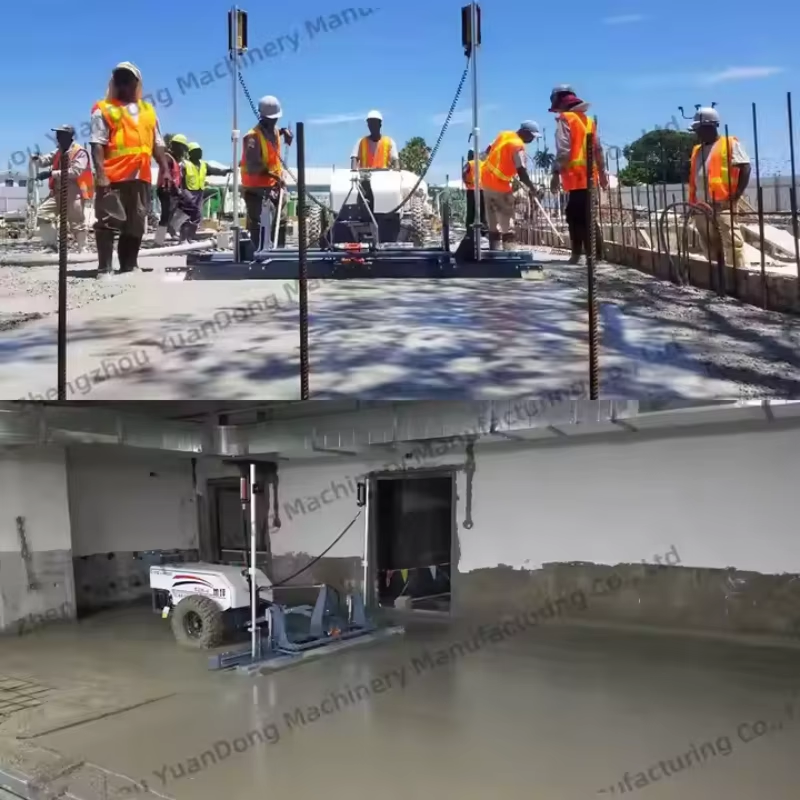
Achieving precise floor flatness in industrial construction requires advanced equipment and proven techniques. A concrete laser screed represents the modern solution to this critical challenge, combining automated guidance systems with real-time feedback to ensure surfaces meet exacting tolerances and performance standards across warehouses, manufacturing facilities, and commercial spaces.
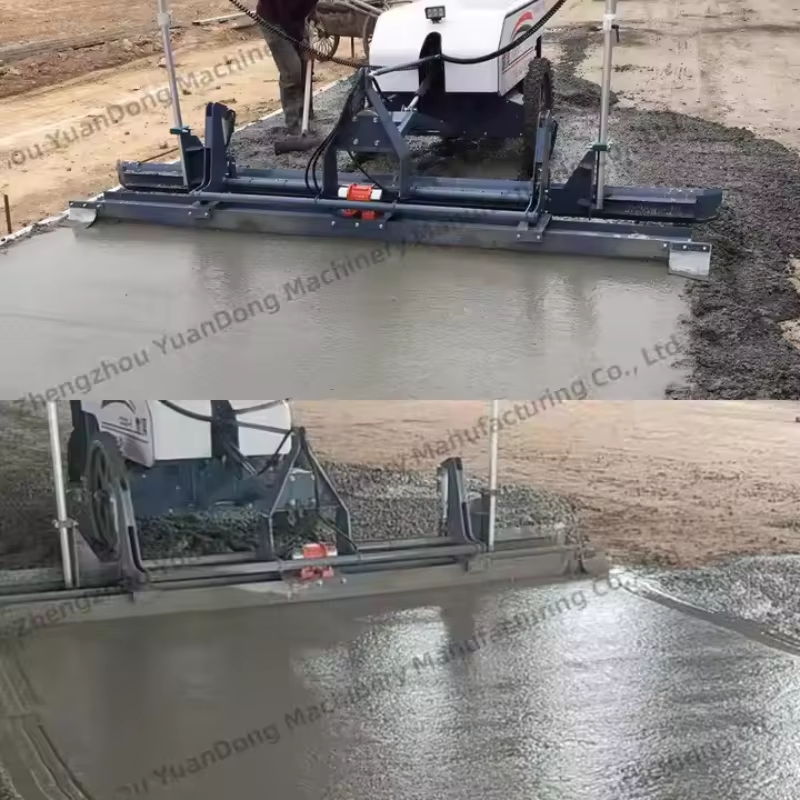
Understanding how laser screed machine leveling works at the operational level is essential for contractors, project managers, and facility owners who depend on consistently flat, level surfaces. Modern concrete floor flatness tolerance standards demand precision that manual screeding cannot reliably deliver, making laser-guided systems indispensable for meeting specification requirements and reducing costly rework during construction phases.
How Laser Screed Machine Leveling Delivers Accuracy
Real-Time Laser Guidance Technology
The foundation of laser screed machine leveling precision lies in automated laser reference systems that continuously scan the concrete surface during placement and finishing. These systems use rotating laser beams that establish a perfectly level datum line, eliminating human judgment variables and providing consistent feedback throughout the screeding operation. The self-propelled screed paver responds instantly to deviations, making micro-adjustments to maintain the target elevation across the entire surface area without operator fatigue or inconsistency.
Laser-guided concrete laser screed equipment can maintain flatness tolerances within millimeters across expansive floor areas, which is impossible with traditional manual screeding methods. The automation inherent in self-propelled screed paver systems removes the human factors that typically introduce surface irregularities, waviness, and elevation variations that compromise floor performance, drainage efficiency, and equipment operation in subsequent use.
Sensor Integration and Surface Response
Modern laser screed machine leveling systems integrate multiple sensors that detect subtle changes in concrete surface elevation and adjust screed blade position hydraulically in real time. These sensors work continuously as the self-propelled screed paver moves forward, creating a feedback loop that prevents over-screeding in soft concrete and under-screeding in areas of higher resistance. The result is uniform concrete floor flatness tolerance compliance that meets or exceeds industry specifications for critical applications.
This sensor-driven approach to concrete laser screed operation captures data points thousands of times per meter, delivering accuracy levels that traditional methods cannot match. The continuous adjustment capability means that even subtle surface variations caused by concrete settlement, subsurface irregularities, or material inconsistency are corrected during the initial screeding pass, eliminating the need for expensive floor grinding or shot-blasting remediation work.
Concrete Floor Flatness Tolerance Standards and Requirements
Understanding Industry Flatness Specifications
Concrete floor flatness tolerance standards define how much variation is acceptable within specific floor types and functional requirements. Laser screed machine leveling enables compliance with stringent flatness specifications such as FF (floor flatness) ratings that measure the maximum deviation from a perfectly flat plane across the floor surface. Different industries and applications require different concrete floor flatness tolerance ranges; warehouses with automated material handling systems demand tighter tolerances than general commercial spaces.
The concrete laser screed achieves flatness tolerances as tight as FF 20 to FF 30 depending on equipment capability and operator proficiency, significantly outperforming manual methods that typically deliver FF 10 to FF 15. Meeting these higher flatness standards using a self-propelled screed paver reduces rework costs, accelerates project timelines, and ensures that subsequent flooring, equipment installation, or operational activities proceed without complications from surface irregularities.
Practical Application of Tolerance Requirements
High-tolerance concrete floor flatness tolerance specifications protect critical operations including pharmaceutical manufacturing, precision equipment assembly, automated warehousing systems, and clean room environments where floor flatness directly impacts operational efficiency and product quality. A concrete laser screed delivers the precision these applications demand, ensuring that heavy equipment sits level, automated guided vehicles operate reliably, and material flow remains unobstructed by surface waves or high spots.
When specifying laser screed machine leveling for a project, understanding the functional requirements of the finished floor determines the concrete floor flatness tolerance target. Over-specifying tolerance beyond functional need increases project costs, while under-specifying creates performance issues that become expensive to remedy after construction completion. Experienced contractors use self-propelled screed paver systems to achieve cost-effective tolerance compliance aligned with actual operational requirements.
Benefits of Self-Propelled Screed Paver Systems
Operational Efficiency and Speed
A self-propelled screed paver equipped with laser screed machine leveling capability significantly reduces concrete placement time compared to traditional screeding methods, while simultaneously improving surface quality and flatness achievement. The automated movement eliminates operator positioning challenges, reduces physical strain, and enables larger areas to be screeded in a single continuous pass, minimizing joint lines and variation between screed passes that plague manually screeded surfaces.
The concrete laser screed's self-propelled design means fewer workers required on the screed line itself, reducing labor costs and improving site safety by removing personnel from positions where they might contact rotating equipment or work around moving machinery. Project schedules compress because the combination of speed and accuracy reduces waiting time between screed completion and subsequent finishing work, allowing downstream activities to begin promptly without rework delays.
Quality Consistency and Long-Term Performance
Every concrete laser screed application produces consistent results because the technology eliminates variability introduced by different operators, fatigue, or environmental judgment calls that affect traditional screeding. This consistency extends the service life of the finished floor by ensuring uniform strength development, proper drainage patterns, and stable foundation conditions for equipment and structures placed on the surface.
Self-propelled screed paver systems create surfaces that maintain their specified flatness throughout the building's operational life, reducing future maintenance costs, equipment wear patterns that result from uneven support, and the operational inefficiencies caused by floors that develop waves or settlement over time. The initial investment in laser screed machine leveling technology pays dividends through reduced life-cycle cost and extended asset performance intervals.
FAQ
What is the difference between concrete laser screed accuracy and traditional manual screeding?
A concrete laser screed uses automated laser guidance and real-time sensors to maintain consistent elevation within millimeters, while manual screeding relies on operator skill and references that degrade over long distances. Laser screed machine leveling achieves concrete floor flatness tolerance of FF 20 to FF 30, whereas manual methods typically deliver FF 10 to FF 15. The self-propelled screed paver eliminates human fatigue and inconsistency, ensuring every section meets specification requirements without rework.
How does laser screed machine leveling maintain concrete floor flatness tolerance on large projects?
Laser screed machine leveling systems continuously scan the surface with rotating laser beams and adjust the screed blade hydraulically thousands of times per meter to maintain target elevation. The self-propelled screed paver moves forward at controlled speed while sensors detect deviations and correct them instantly, preventing the surface waves and high spots that accumulate during traditional screeding. This continuous feedback loop ensures the concrete floor flatness tolerance specification is maintained consistently across the entire placement area without operator intervention.
When should I specify a self-propelled screed paver over traditional screeding methods?
Specify a self-propelled screed paver whenever concrete floor flatness tolerance requirements exceed FF 15, when project size makes consistency critical, or when operational requirements demand precision surfaces for equipment installation and automated systems. Use the concrete laser screed for warehouses with automated material handling, pharmaceutical facilities, electronics manufacturing, and any application where floor irregularities create operational inefficiencies or quality risks. The laser screed machine leveling technology justifies its cost through reduced rework, faster project completion, and improved long-term floor performance.